Kick Tolerance as Maximum Kick Volume

Kick Tolerance as Maximum Kick Volume

Concepts

There are several concepts about kick tolerance, but this article only deals with the concept of kick tolerance as the maximum kick volume.

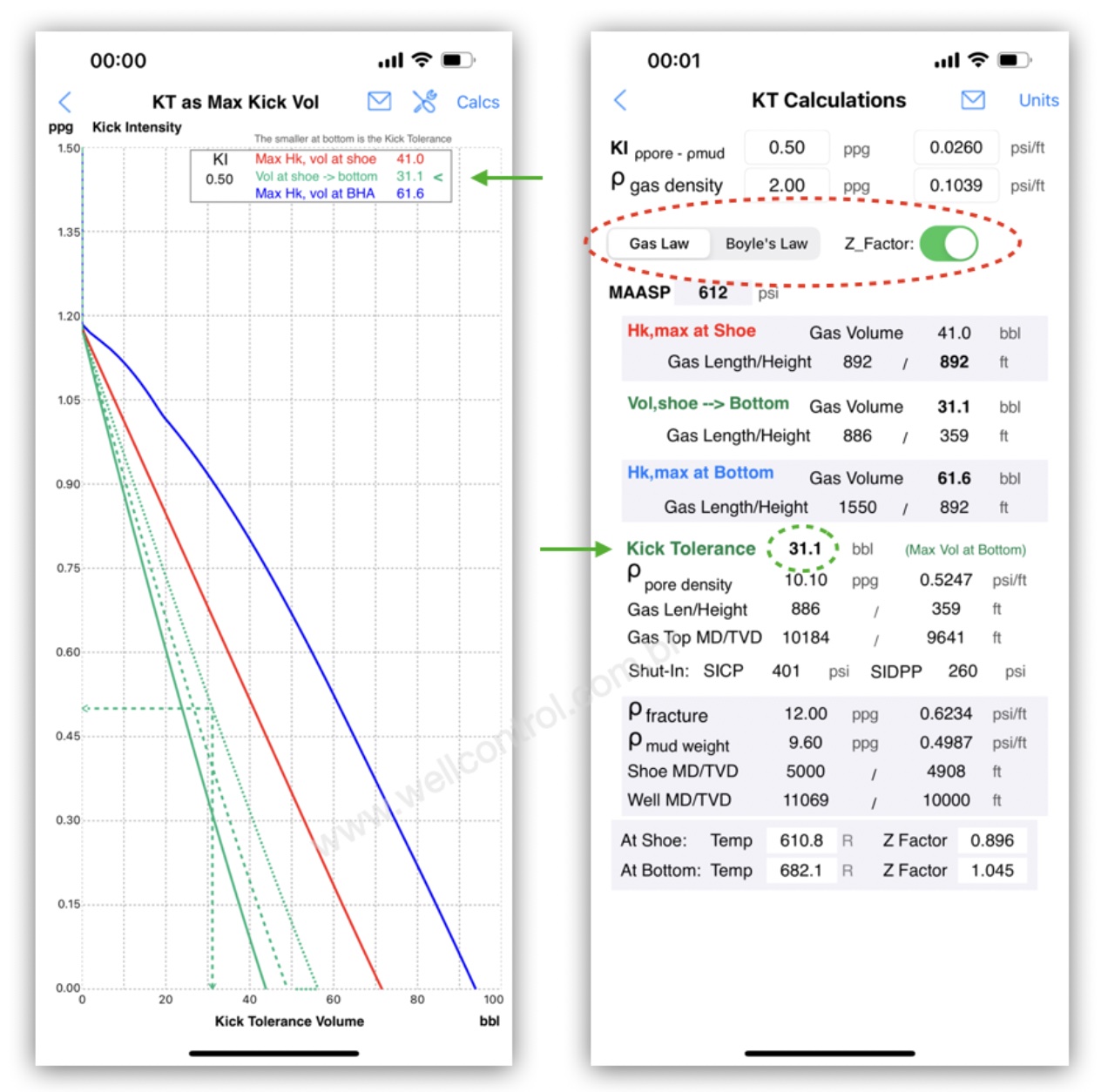
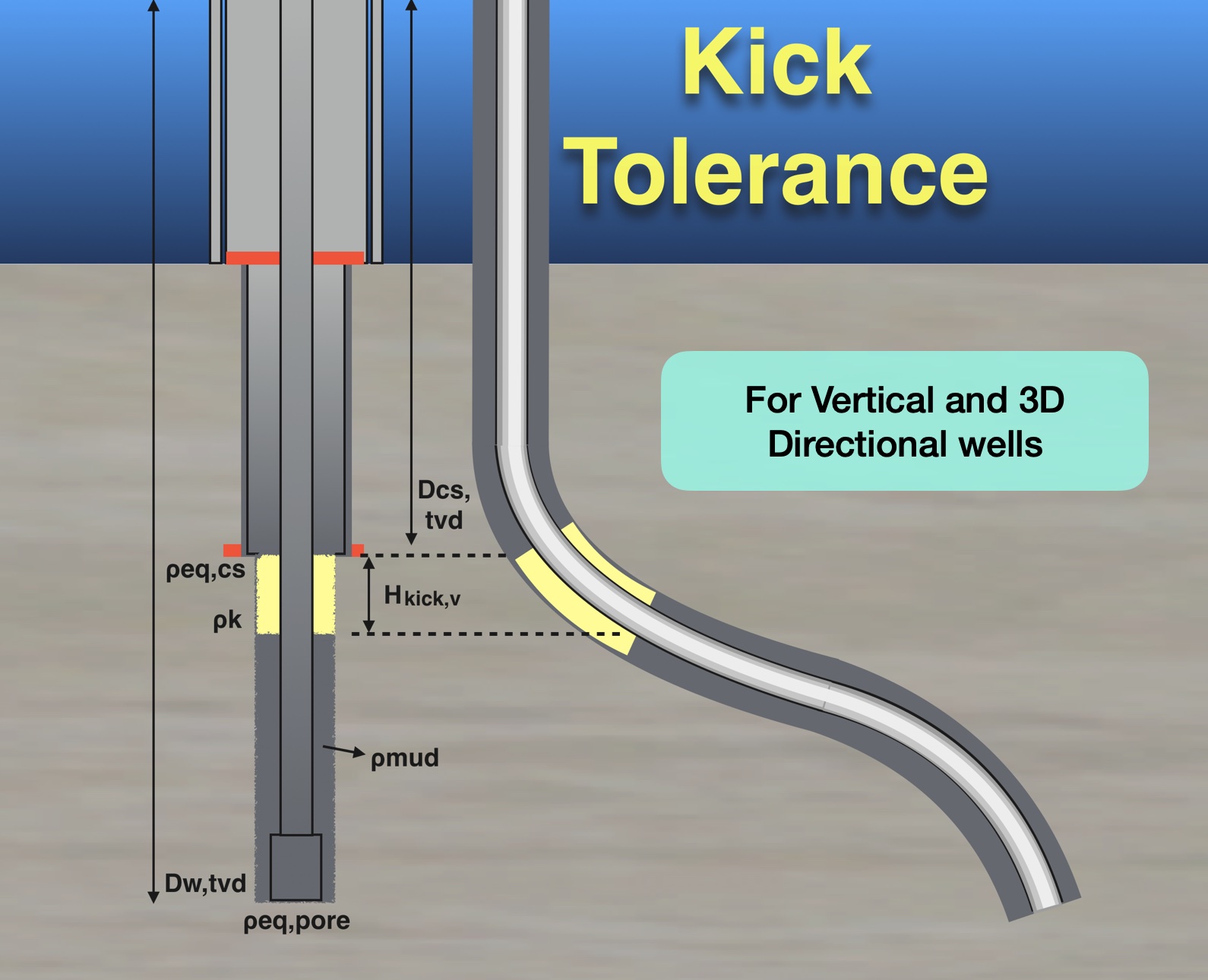
Kick Tolerance is the maximum kick volume that can be taken into the wellbore and circulated out without fracturing the formation at weak point (normally at shoe depth), given a diference between pore density (equivalent) and the mud weight in use.
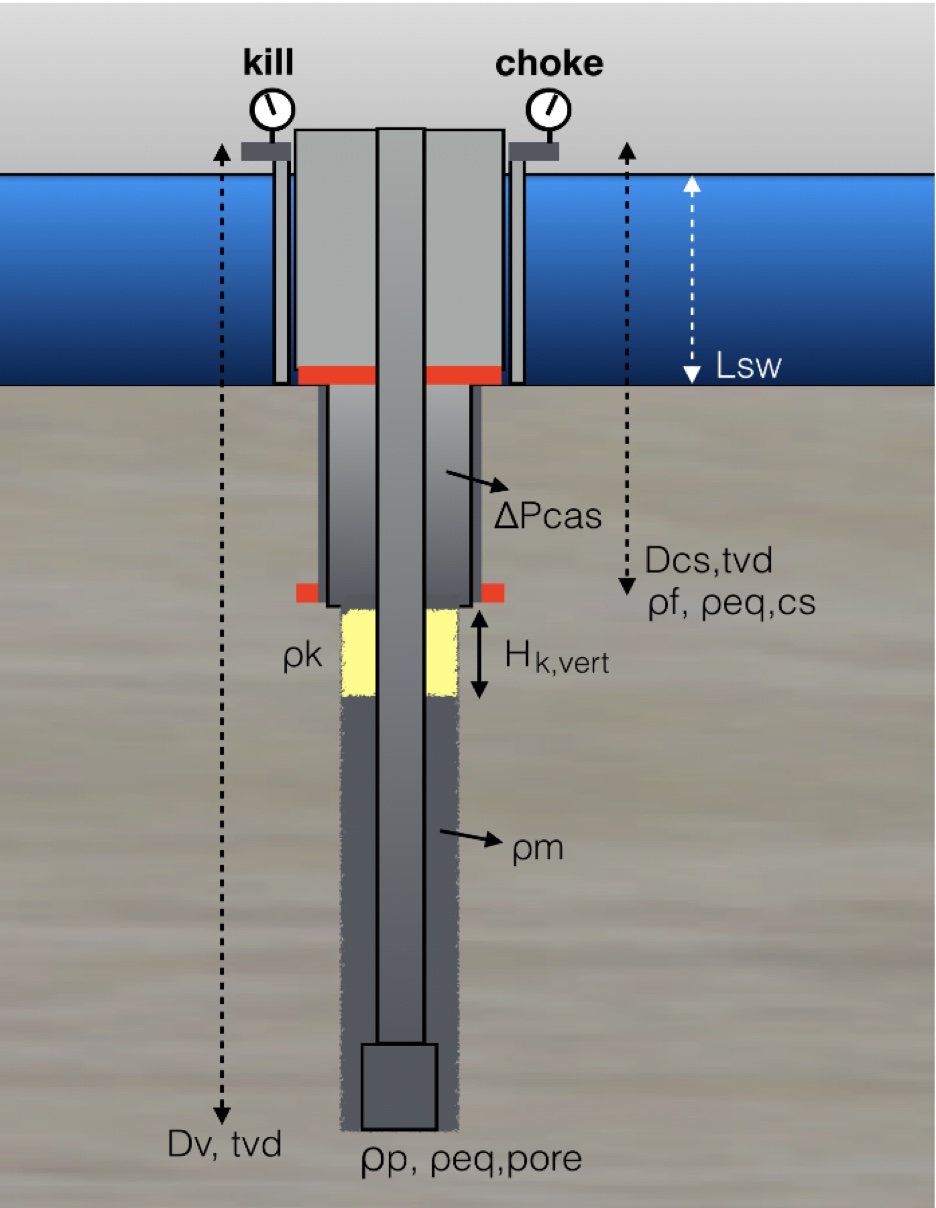
kt_01_well
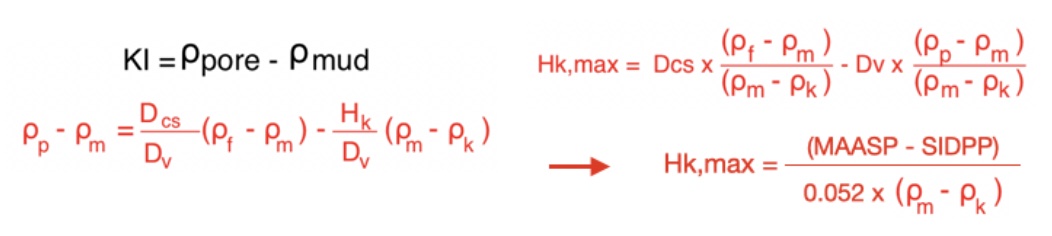
kt_02_formulas

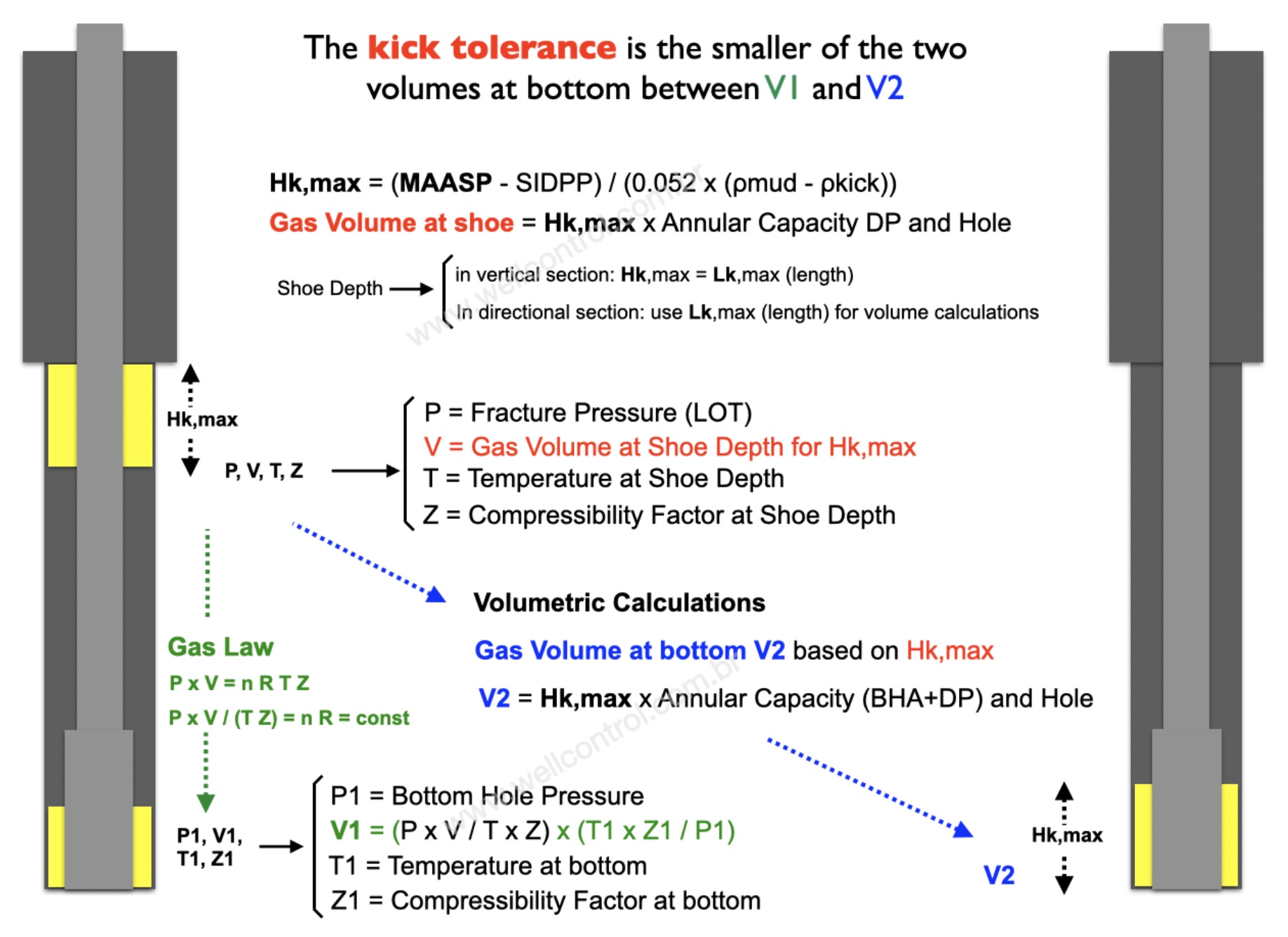
The maximum gas bubble height in the open hole can occur either at the bottom around the BHA (Bottom Hole Assembly) or when the volume is at its maximum when the gas reaches the the casing shoe.

Calculating the Gas Volume at shoe depth based on the Maximum Influx Height

Maximum Gas Volume at shoe = Hk,max x Annular Capacity DP and ID Hole)

1. Calculate V1 at bottom applying the Boyle’s Law: P1 x V1 = P2 x V2    (isothermal)

V1 = Vshoe x P,fracture / P,pore

2. Calculate V2 at bottom around the BHA with height equal to Hk,max, 

V2 = Hk,max x Cap,ann,bha
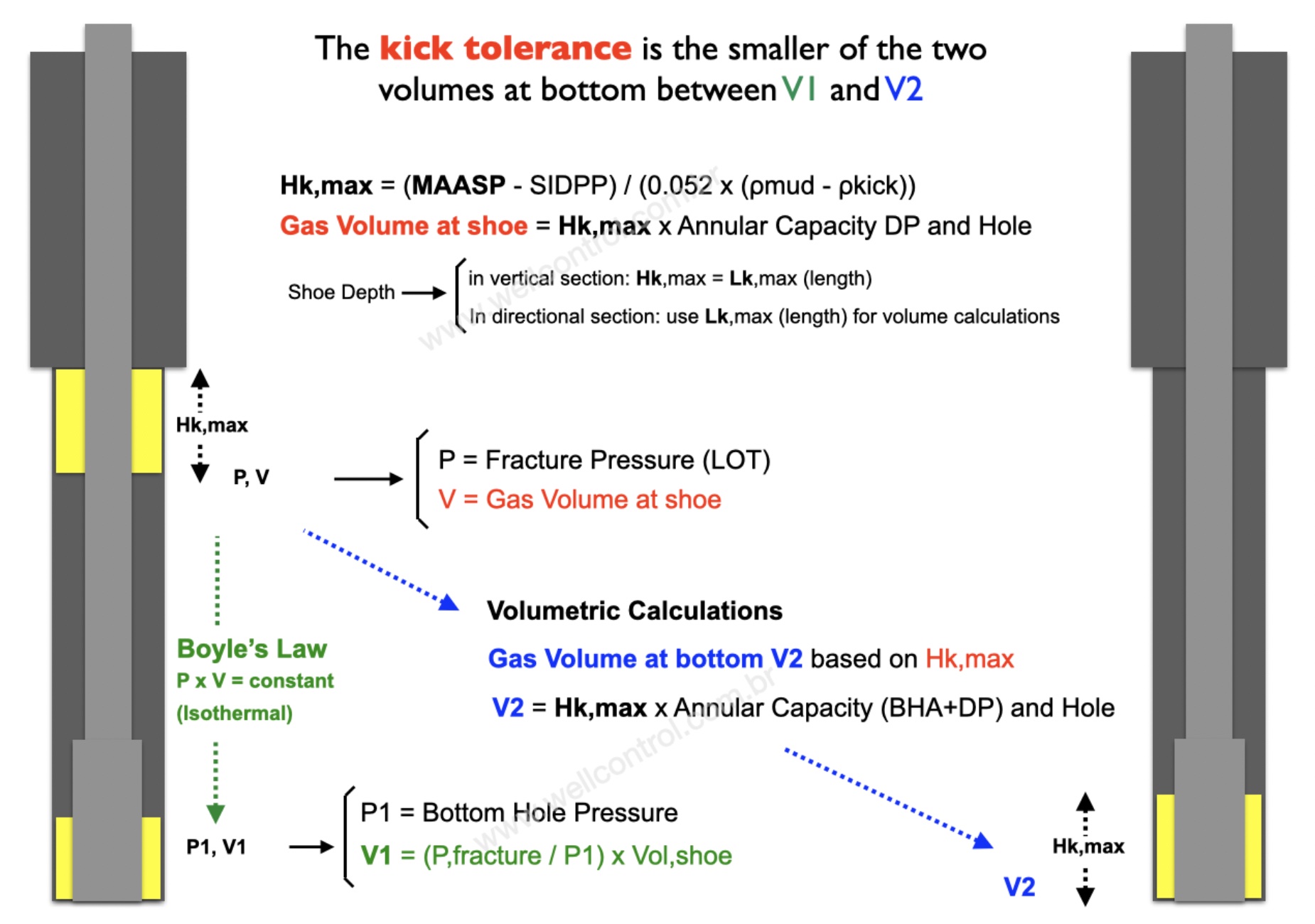
kt_03_boyle_s_law

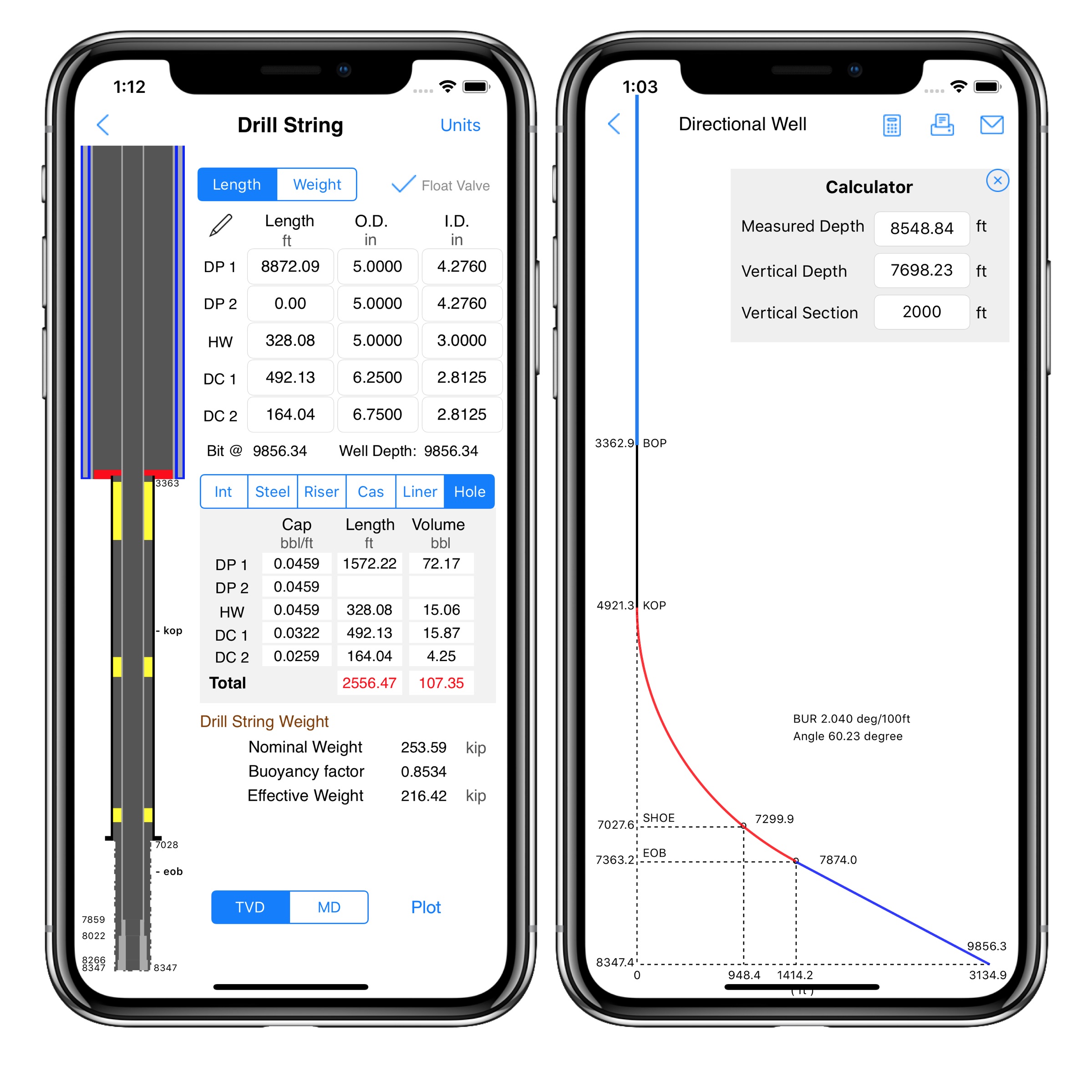
Calculating volumes for Hk,max in the Directional Wells
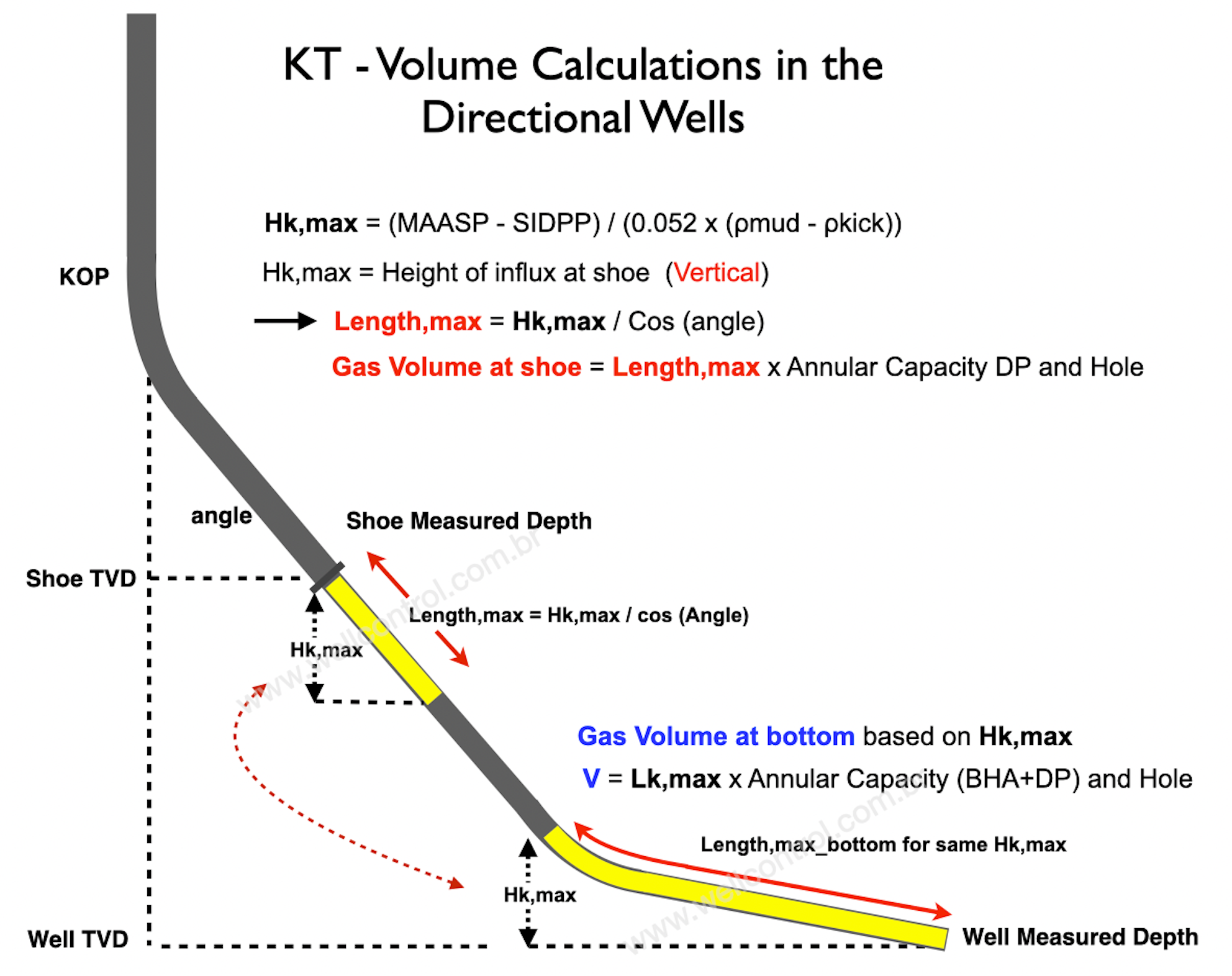
kt_04_vol_in_directional_well

Boyle’s Law

Normally, the formula used only considers Boyle’s Law, without considering that there is a temperature variation from the bottom of the well to the depth of the casing shoe.

Gas Law and Gas Compressibility Factor

For natural gas, the gas law is best applied because there is temperature variation in the well and the gas has a compressibility factor different from 1. 

P x V = n x R x T x Z

P, Pressure
V, Volume
n, Number of moles
R, Constant
T, Temperature
Z, Compressibility Factor of the gas

In this case, the calculations considering the Gas Law:

V1 = (Vshoe x P,shoe) / (Tshoe x Z,shoe) x (Tpore x Z,pore / P,pore)
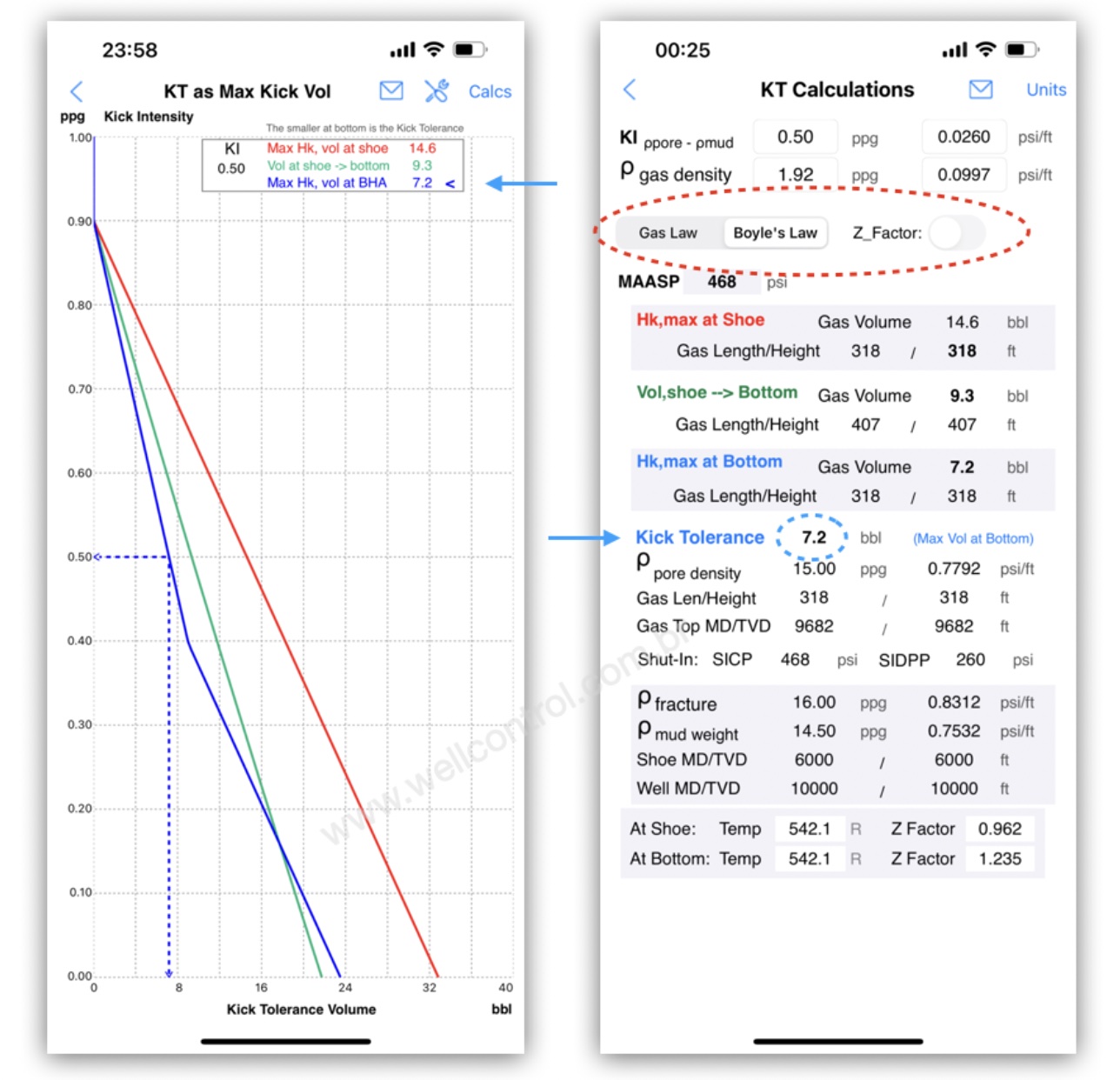
Kick Tolerance (Max Vol) application 

We develop an application with options to select temperature and/or the Z-Factor of the gas. It works with vertical wells and 3D directional wells.

Comparing Boyle’s Law versus Gas Law

On vertical well, the result is not affected when the volume calculated at the bottom of the hole is smaller.

Using the Boyle’s Law: 
Using the Gas Law: 

On directional well, the kick volume at the shoe depth converted to bottom of the hole is normally smaller and the result is affected when applying the Boyle’s Law or the Gas Law.

Note: In this directional well, the shoe depth is in a vertical section. So, height and length of gas bubble can be equal in a directional well.

Using the Boyle’s Law: 
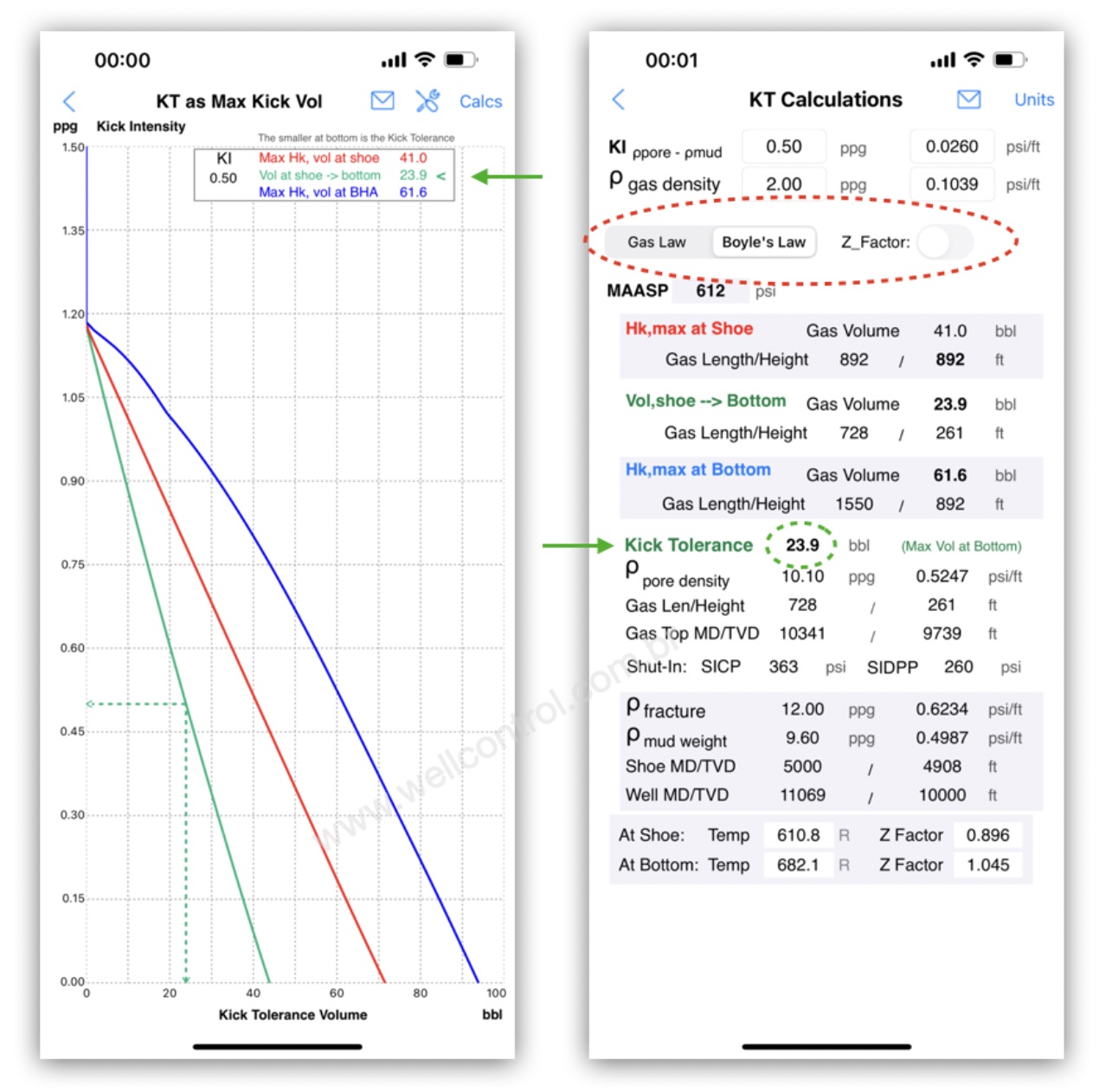
kt_10_boyles_law_dir_well

Using the Gas Law: 

App Store

Available_on_the_App_Store_Badge_US_UK_135x40_0824

These apps are available in our portfolio.

Screenshots

Please visit them by clicking on their respective links to see screenshots.

In our social networks there are many posts about Kick Tolerance

DISCLAIMER

These tools & materials are provided ‘as is’ without warranties of any kind, express or implied.
Please verify the tools provided by this application by yourself before you use them. Ensure you understand the impact of using these tools.
Any use you choose to make of these tools & materials is undertaken by you entirely at you own risk.

Our Website

Please visit our website for more details and other Oil & Gas Applications and for links to our profiles in social networks about well control.
www.wellcontrol.com.br

WelControlApps_profile

The Volumetric Method

The Volumetric Method

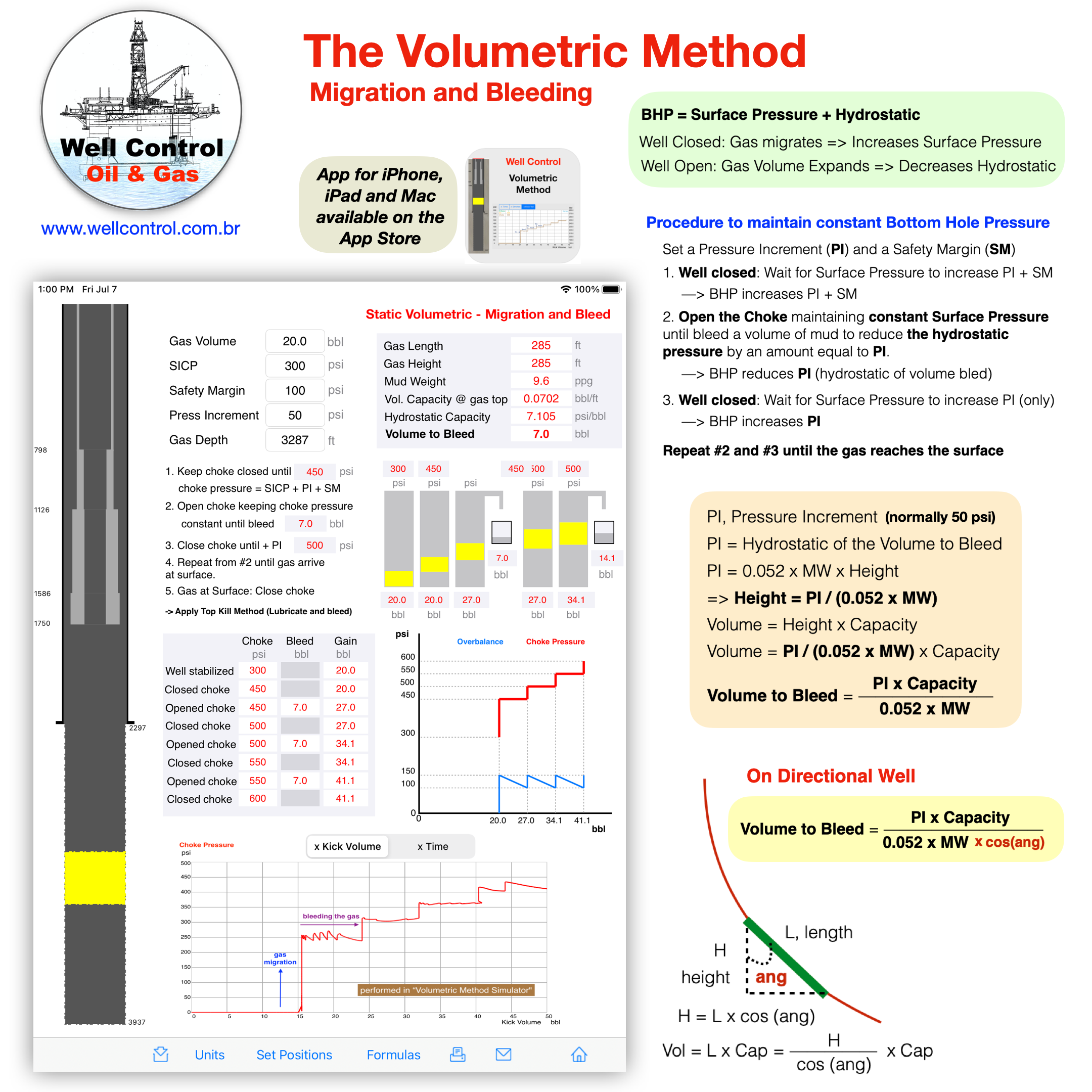
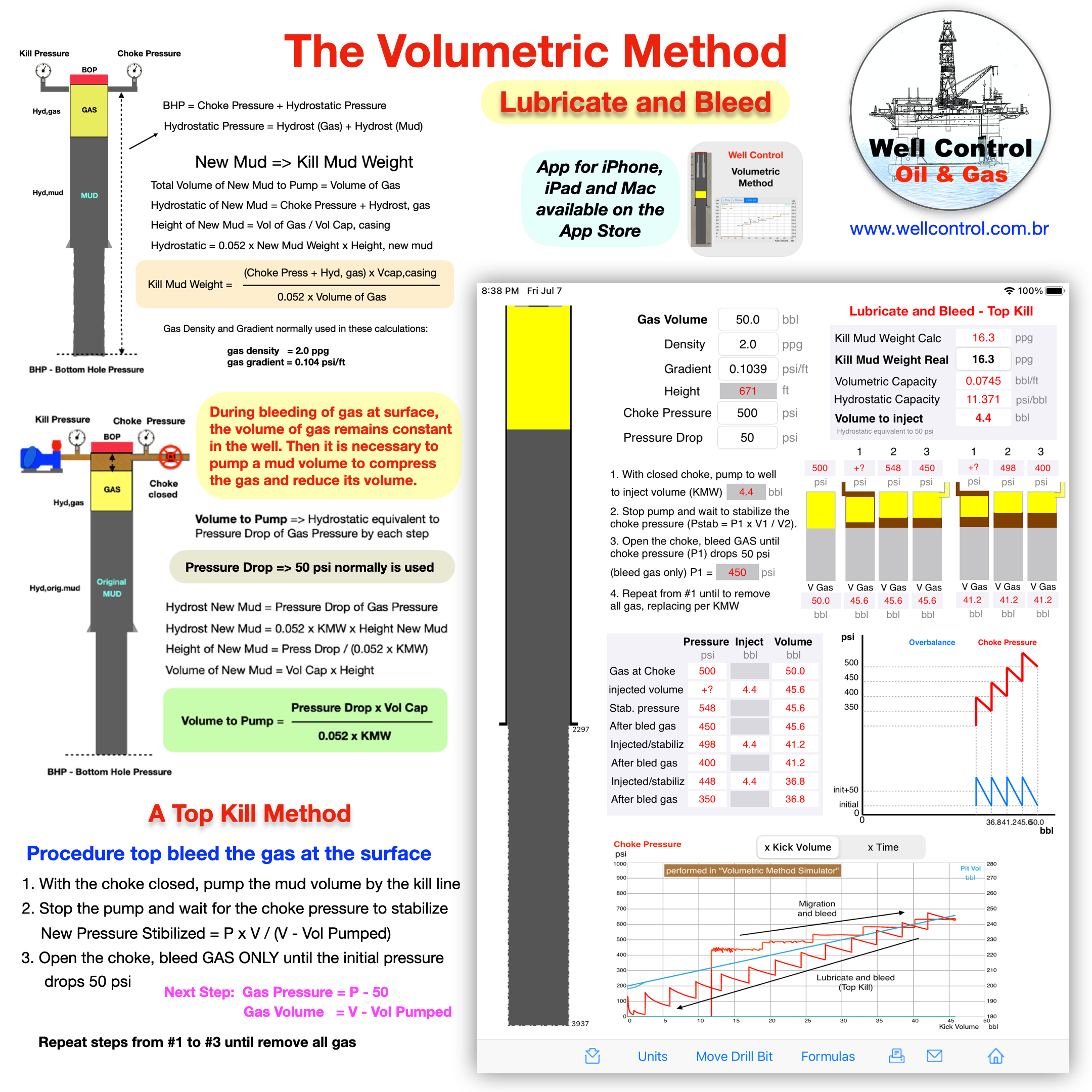
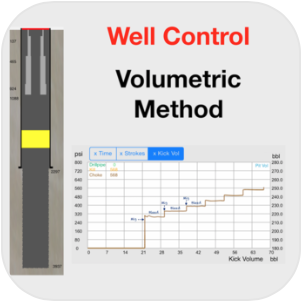
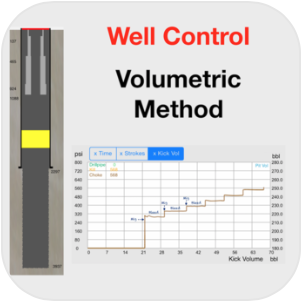
This post shows both steps of the volumetric method (1-wait for migration and bleed and 2-Lubricate and Bleed). 

Apps for iPhone, iPad and Mac (M series) to practice these methods

App for procedure App for simulation
vol_methodvol_method_sim

Volumetric Method Application

This application uses the basic calculations of the Volumetric Method to control oil wells after the occurrence of kick during drilling operations on landing rigs (Onshore).

It is can be applied on the oilfield and also can help in the understanding of the Volumetric Method of well control.

Volumetric Method Simulator 

This is a basic well control simulator for training in Oil & Gas that simulates the control applying the Volumetric Method (and Lubricate and Bleed Method) after the kick detection during stripping out the drillstring on the drilling operations in the oil well.

This is a project also based on app “Kick Game 2” available in our portfolio like the Driller’s Method Simulator and Wait and Weight Method Simulator. Like these apps, just surface parameters are displayed.

Features:

1. Interface based on Hydraulic Choke Panel.
2. Graph in full screen (with background color in black or white) for analysis.
3. Pre-recorded data sheet
4. Well Design with Casing + Open Hole without the Drillstring in the Wellbore.
6. Full features version with pause and digital gauges.
7. Method with Step by Step procedure to turn the exercise easy to practice.

App Store

Available_on_the_App_Store_Badge_US_UK_135x40_0824

These apps are available in our portfolio.

Please visit them by clicking on their respective links to see screenshots.

In our social networks there are many posts about volumetric method. For example: 

Post about the Volumetric Method in Instagram

Volumetric_Method_Jul_2023

Post about the Lubricate and Bleed Method in Instagram

Lubricate_and_Bleed_Jul_2023

DISCLAIMER

These tools & materials are provided ‘as is’ without warranties of any kind, express or implied.
Please verify the tools provided by this application by yourself before you use them. Ensure you understand the impact of using these tools.
Any use you choose to make of these tools & materials is undertaken by you entirely at you own risk.

Our Website

Please visit our website for more details and other Oil & Gas Applications and for links to our profiles in social networks about well control.
www.wellcontrol.com.br

wellcontrol_apps_blogs_02

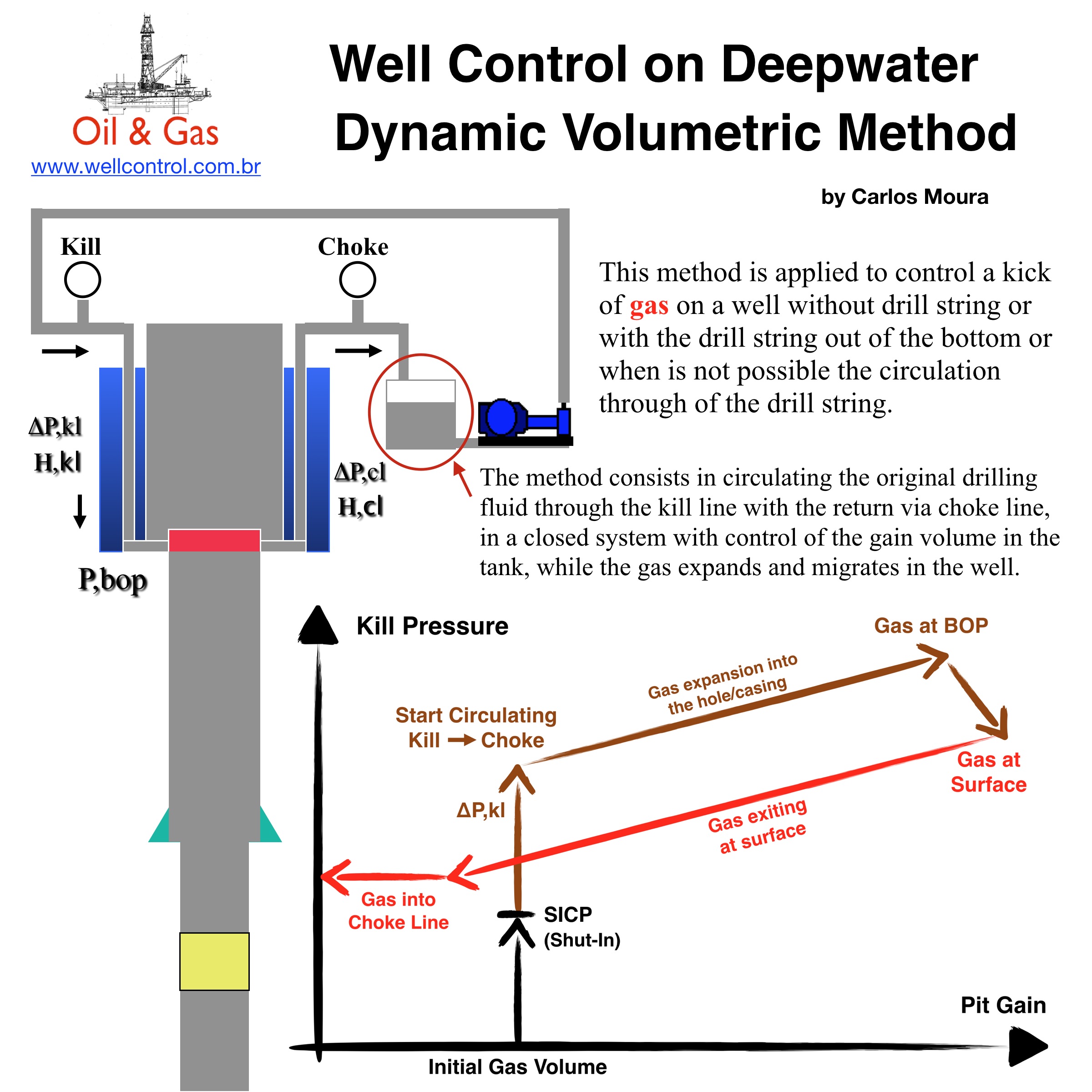
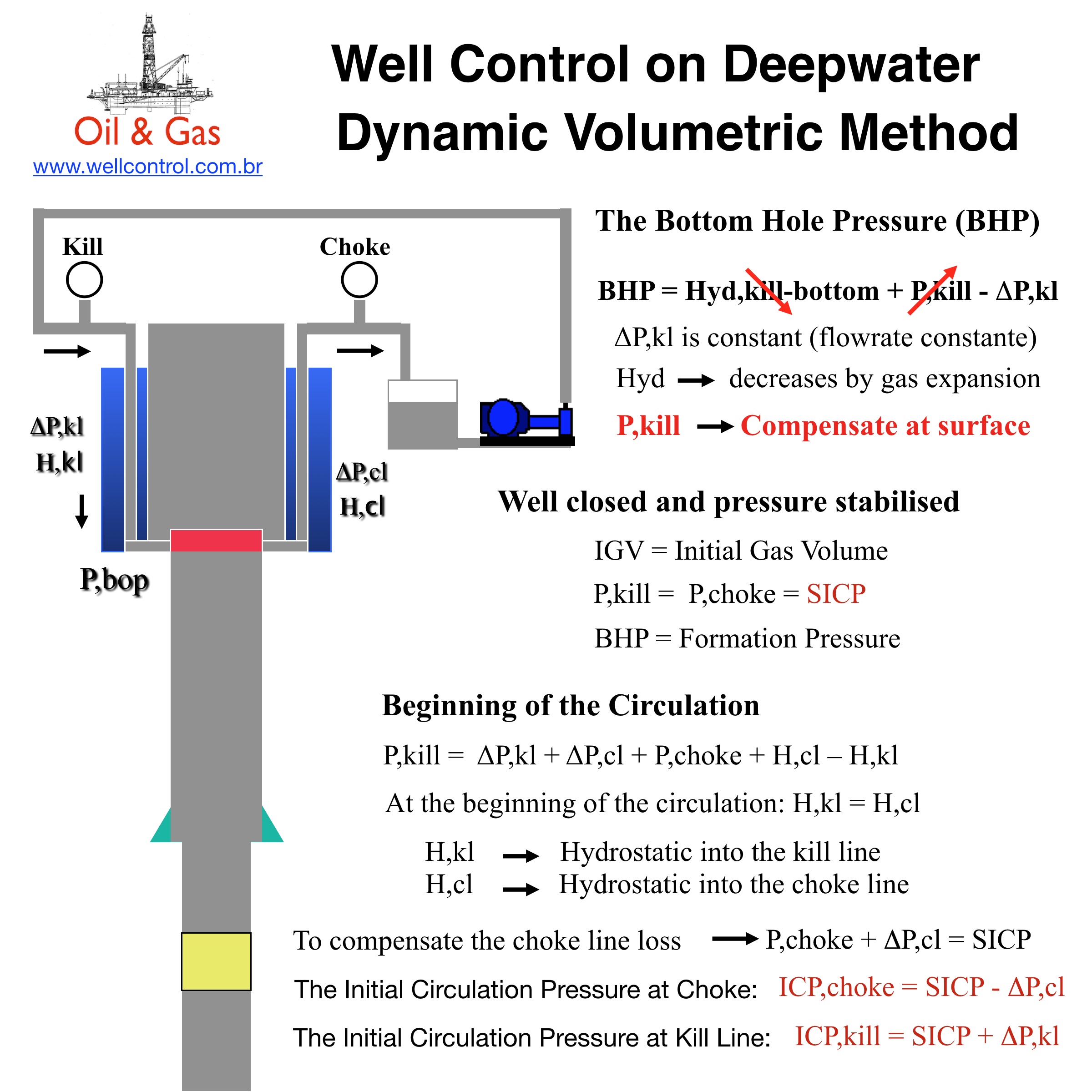
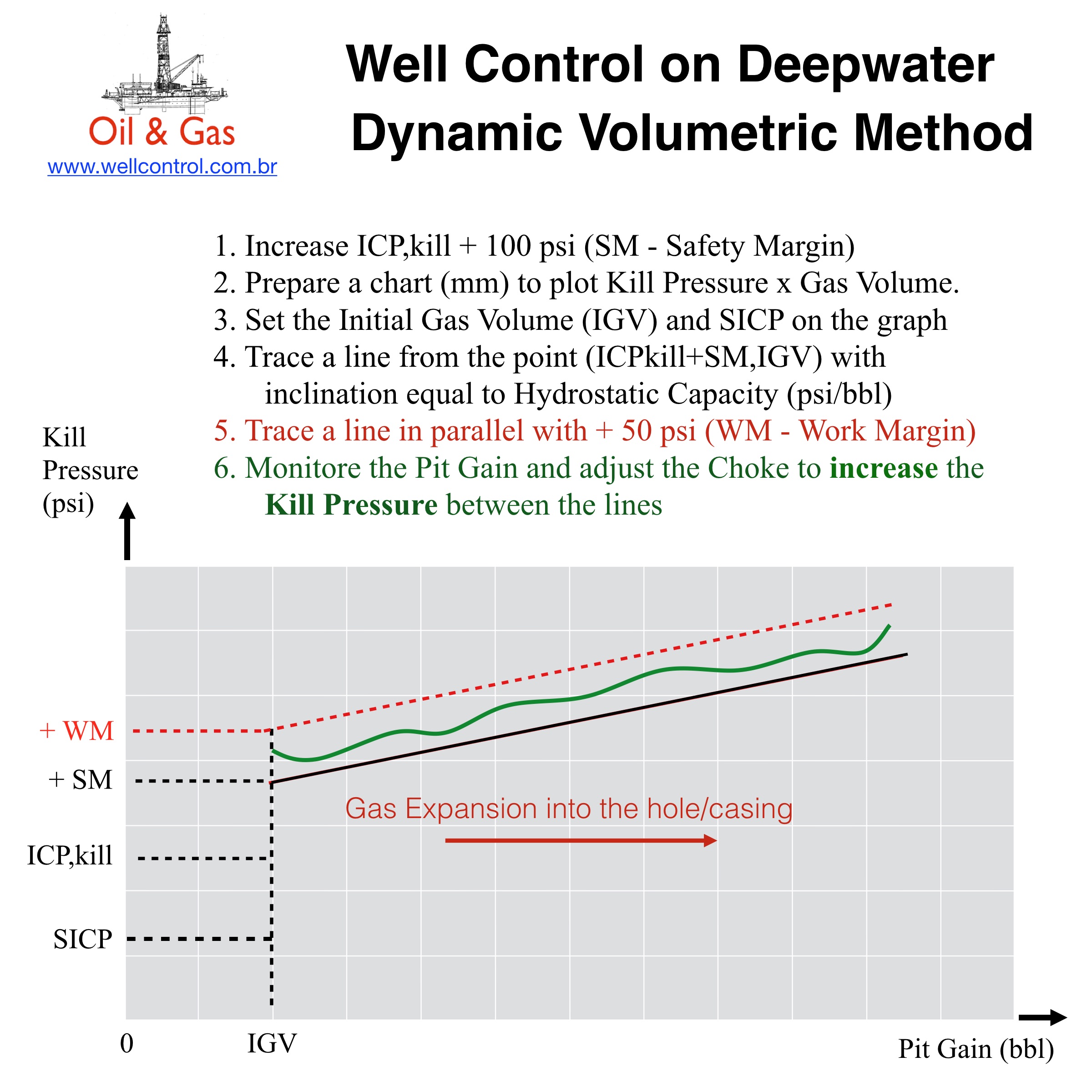
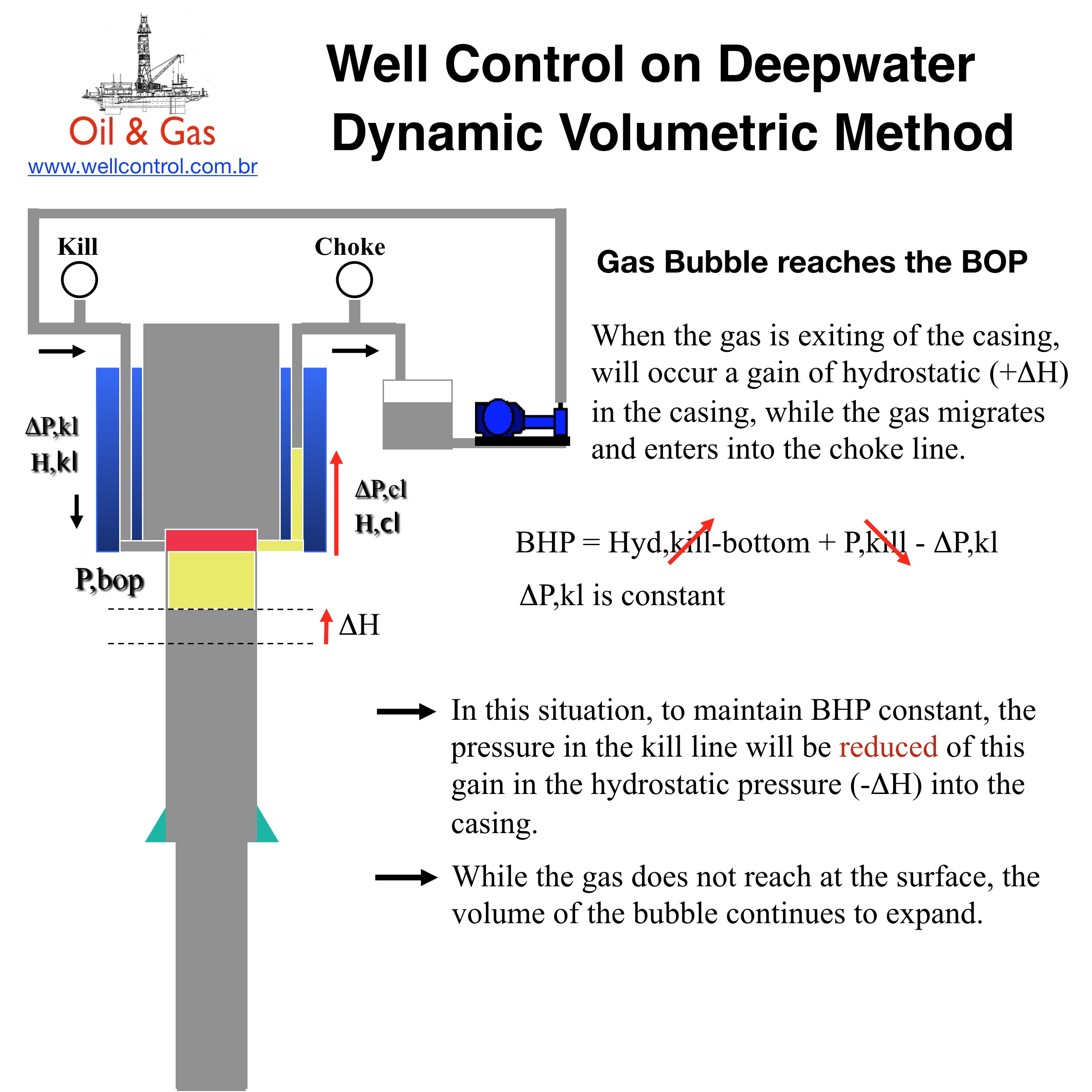
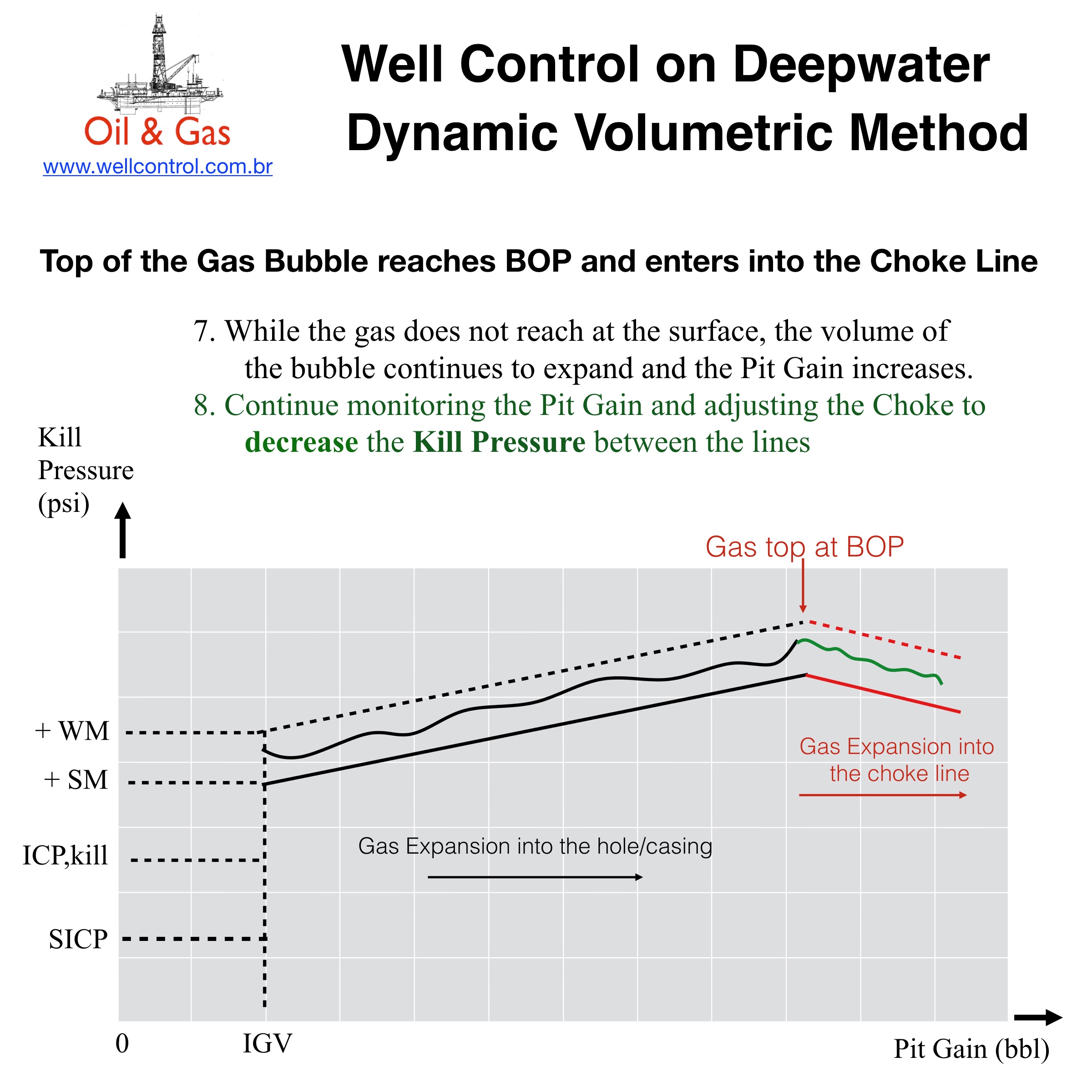
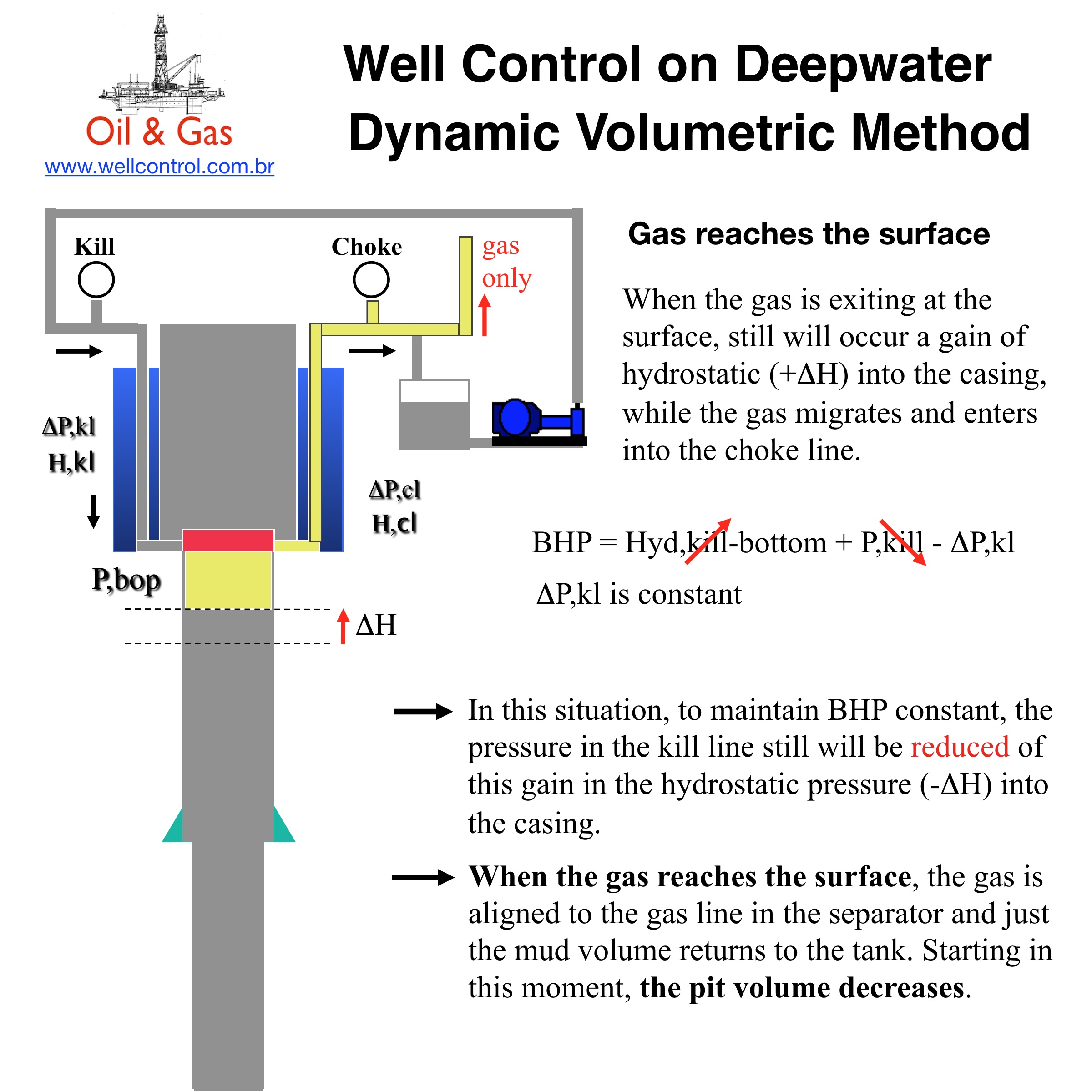
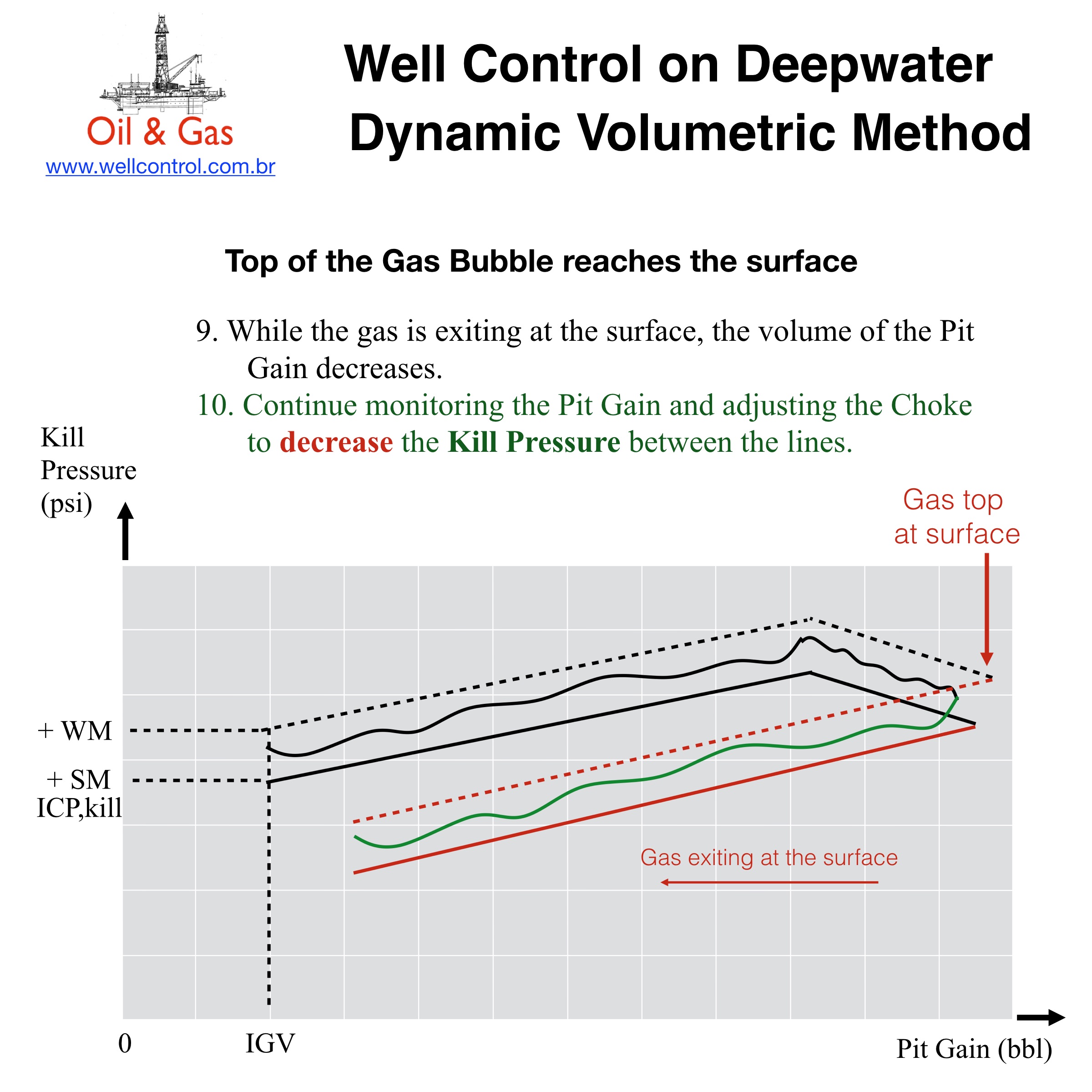
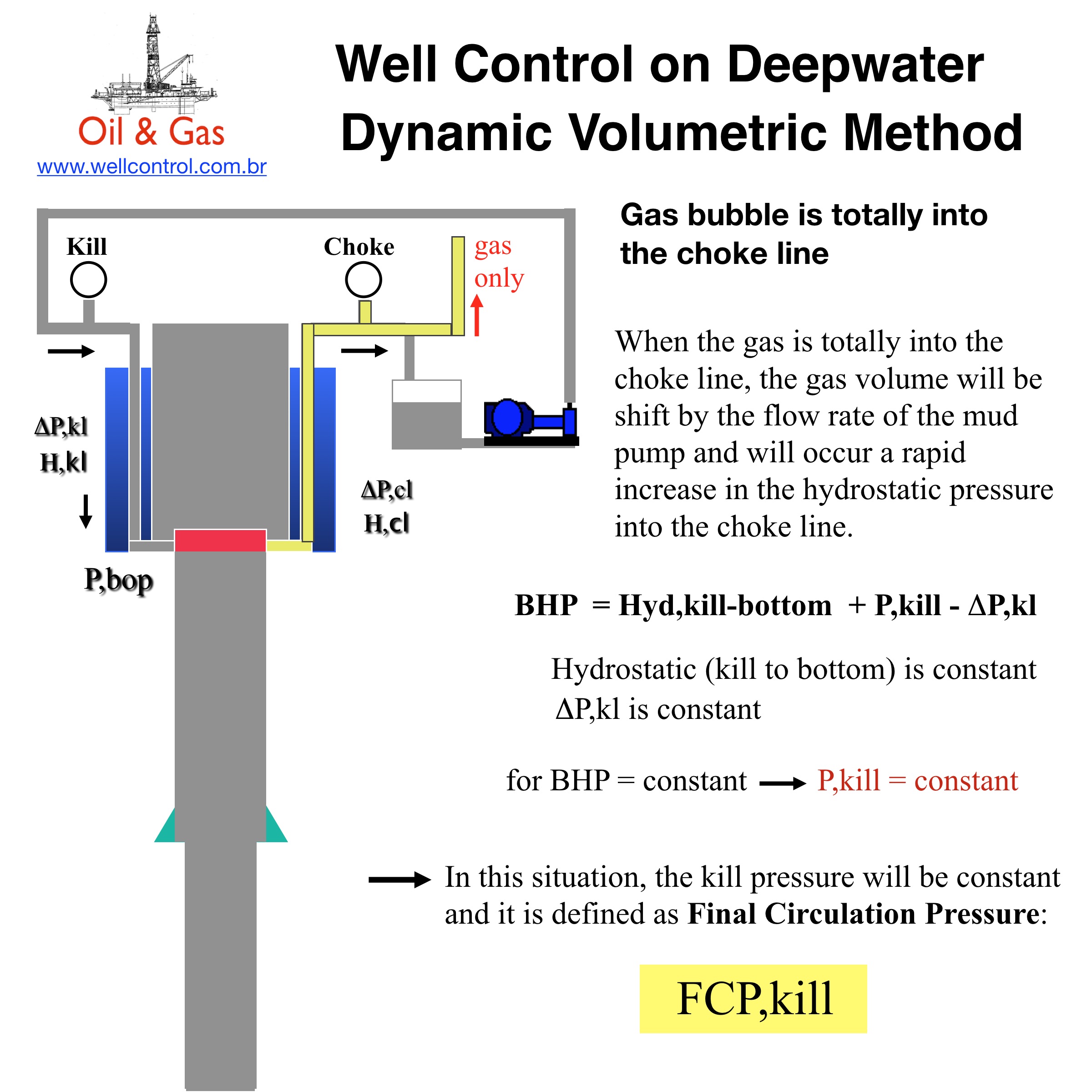
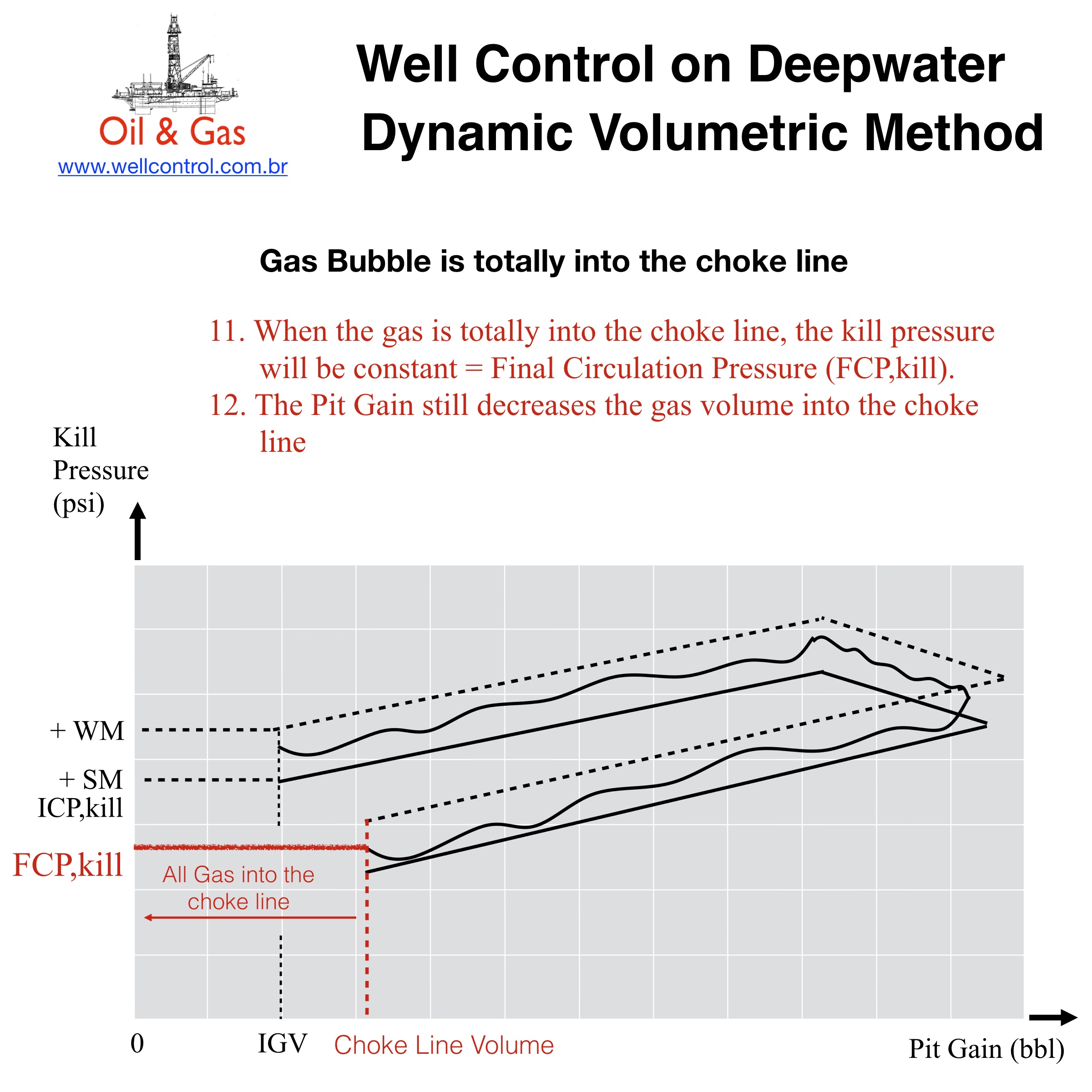
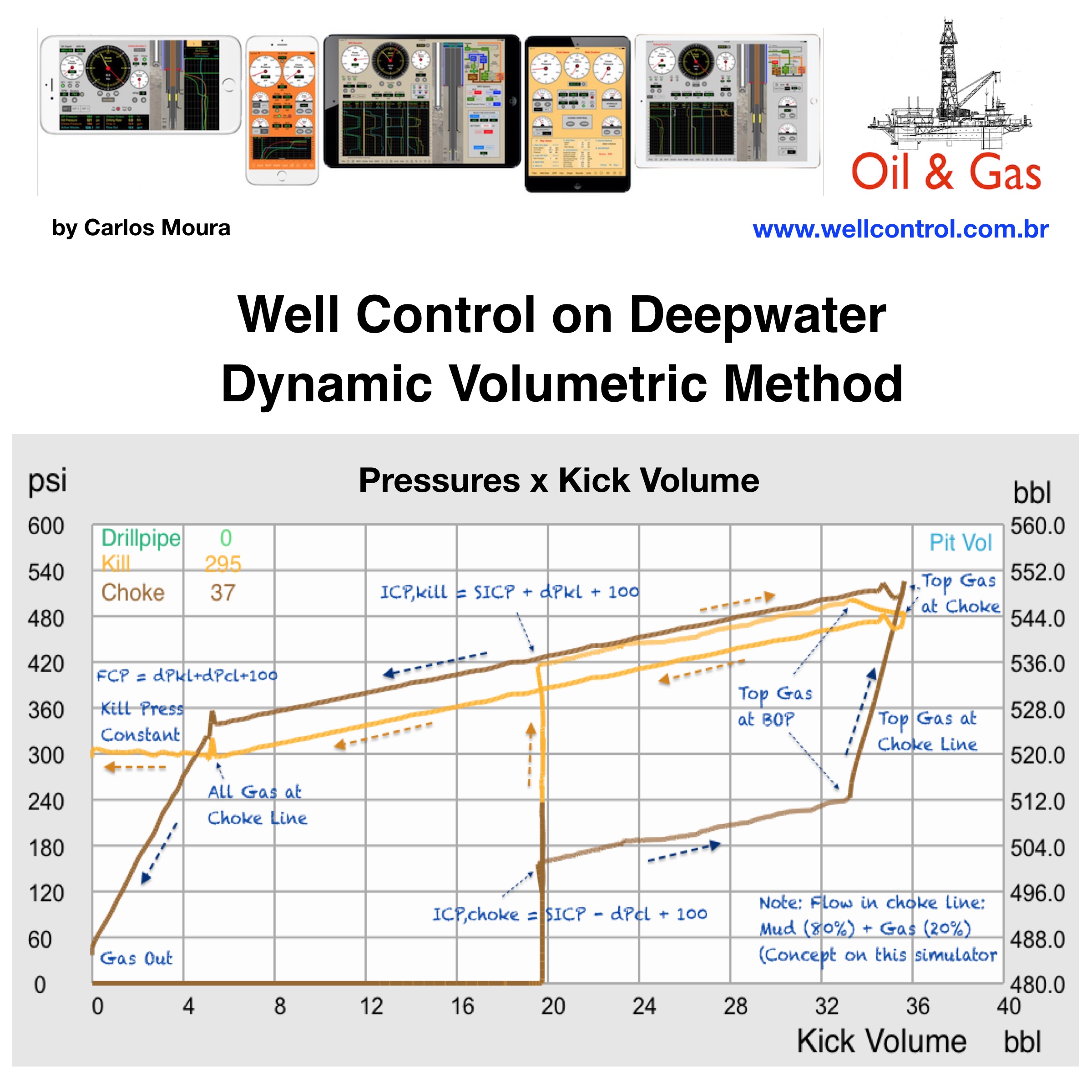
Dynamic Volumetric Method on Deepwater

You can use our simulators for iPhone and iPad to practice this Well Control Method:
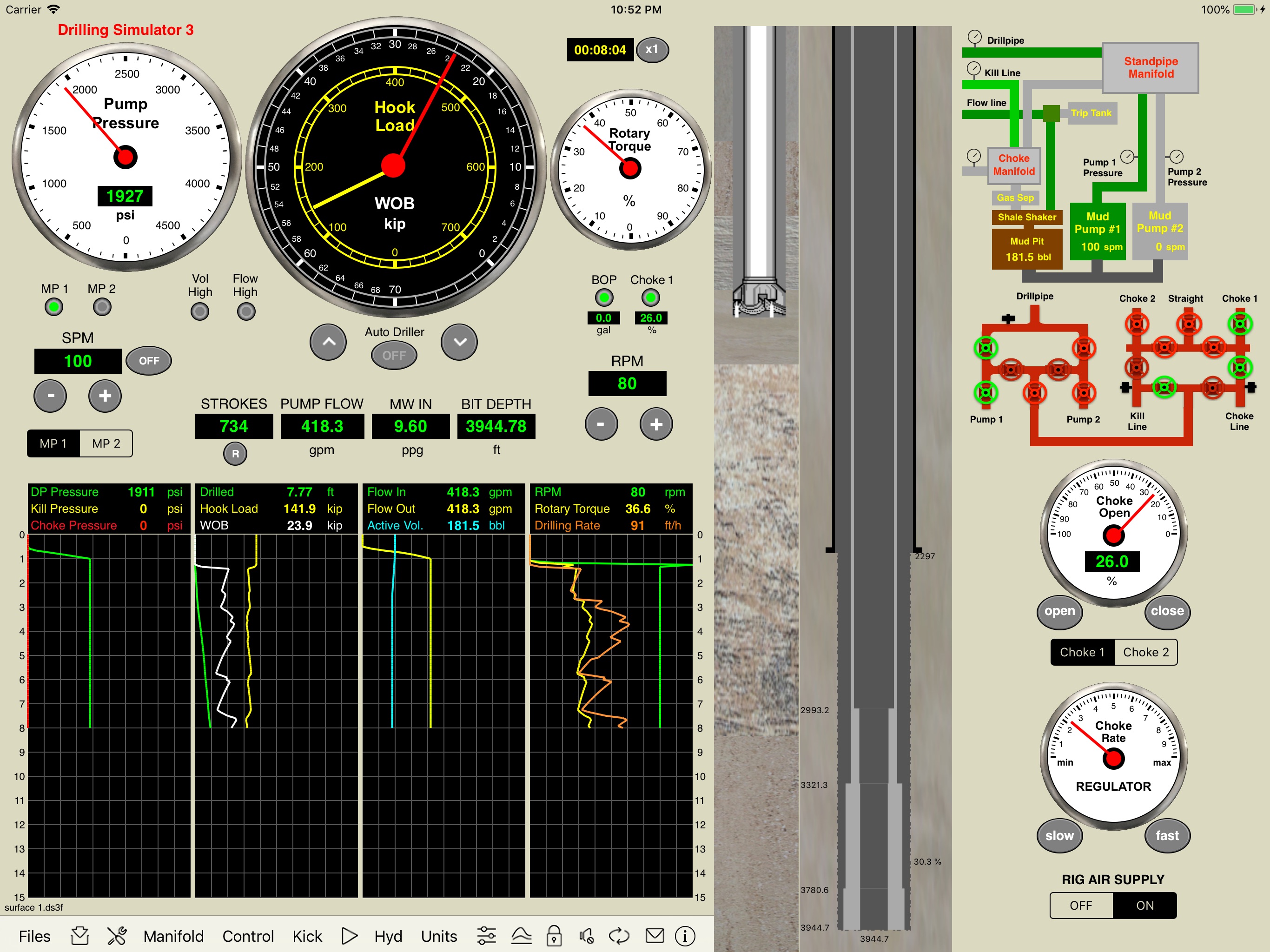
– Drilling Simulator 3
– Well Control Simulator 2
– Well Control Simulator HD

dmv_blog_01
dmv_blog_02
dmv_blog_03
dmv_blog_04
dmv_blog_05
dmv_blog_06
dmv_blog_07
dmv_blog_08
dmv_blog_09
dmv_blog_10
wws_blog_10

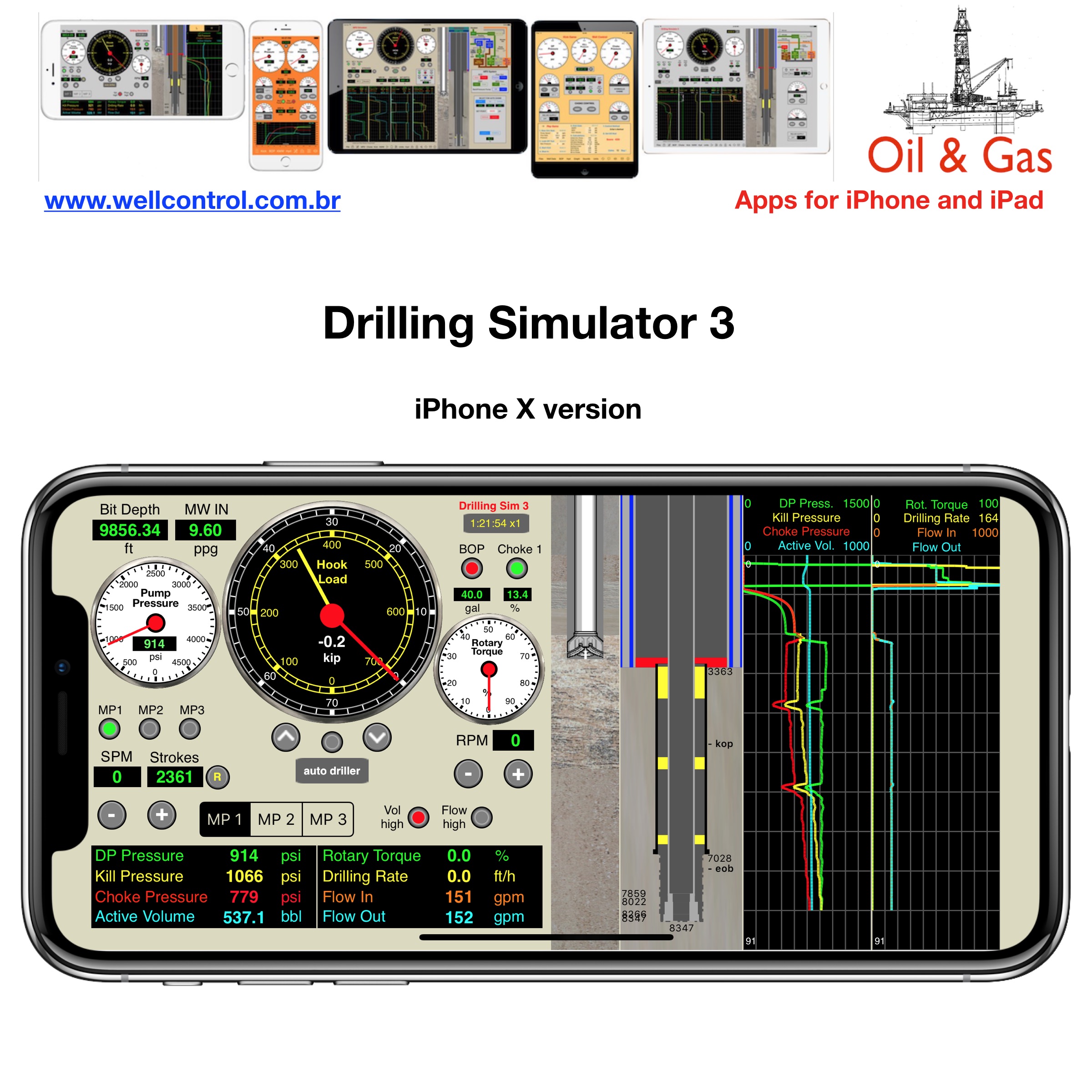
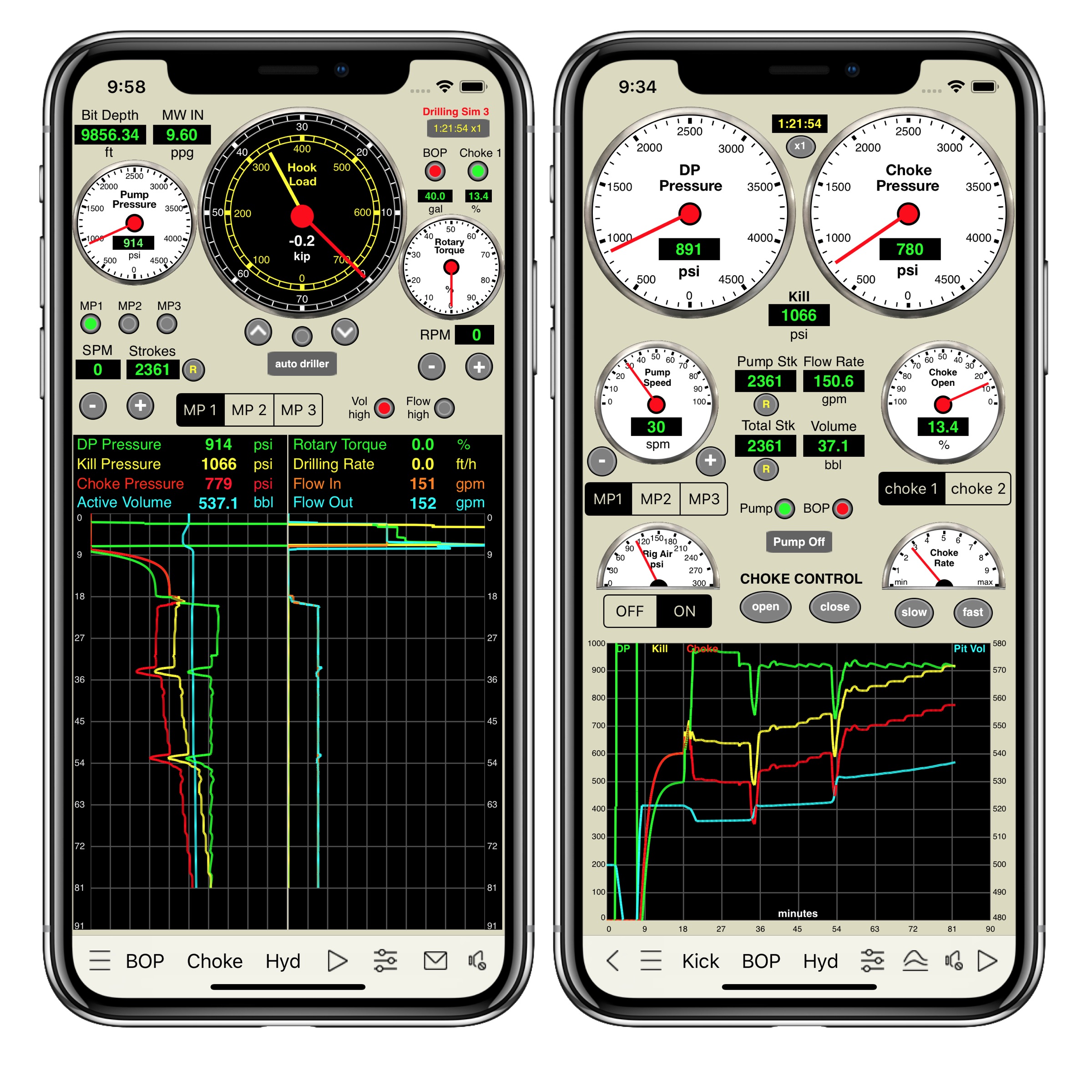
Drilling Simulator 3 – New Version 2.0 – iPhone version

Drilling Simulator 3

 designed for both iPhone and iPad

New Version 2.0 now available on the App Store !!!

ds3_20_01

Drilling Simulator 1:

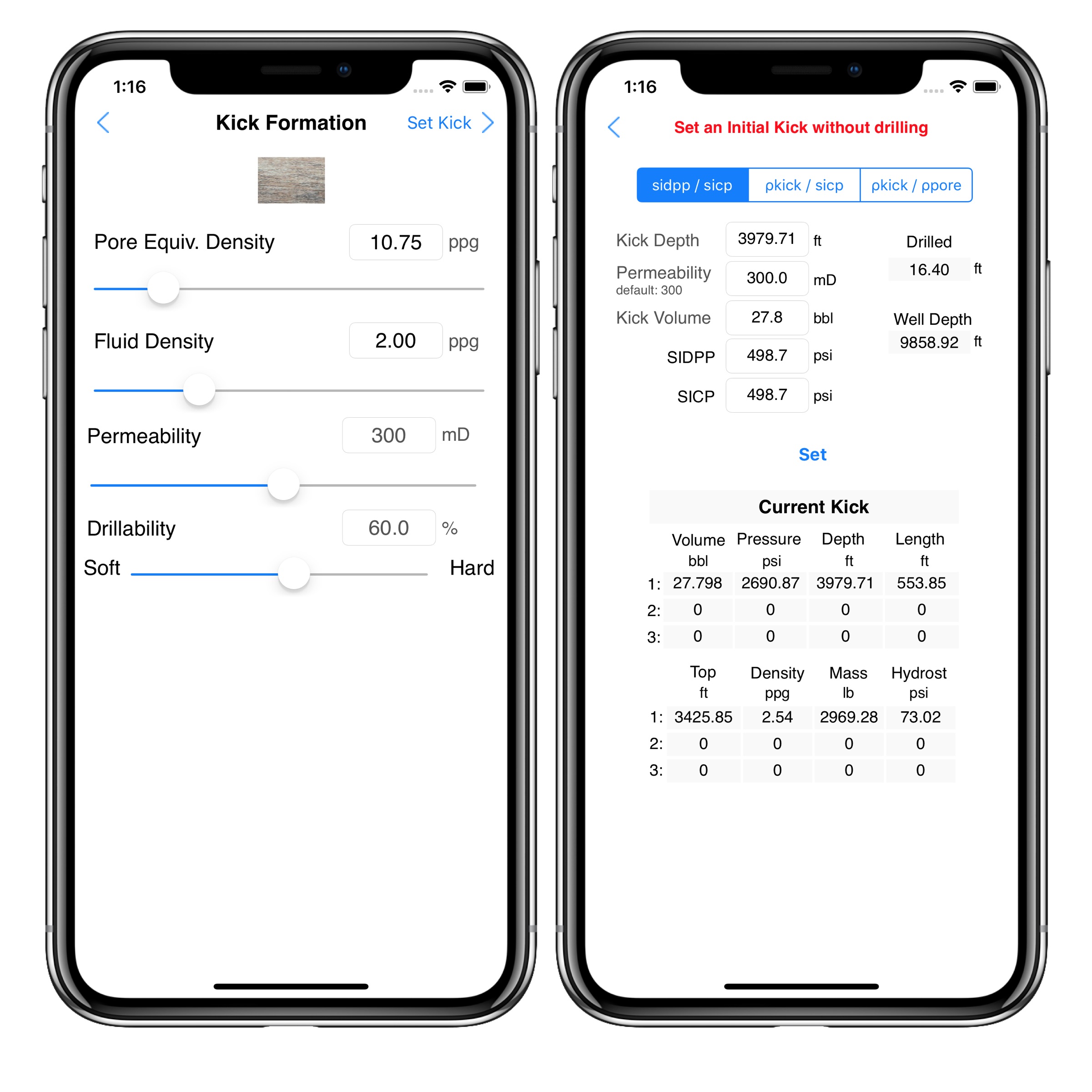
– Drilling on vertical well, kick detection, shut-in, stabilisation of pressures (sidpp, sicp, kick volume), save to iCloud to import from other app “Well Control Simulator”.

Drilling Simulator 2:

all of drilling simulator 1 PLUS Direcional and horizontal wells, well control using 01 choke and 01 single kick bubble on borehole and graphical analysis.

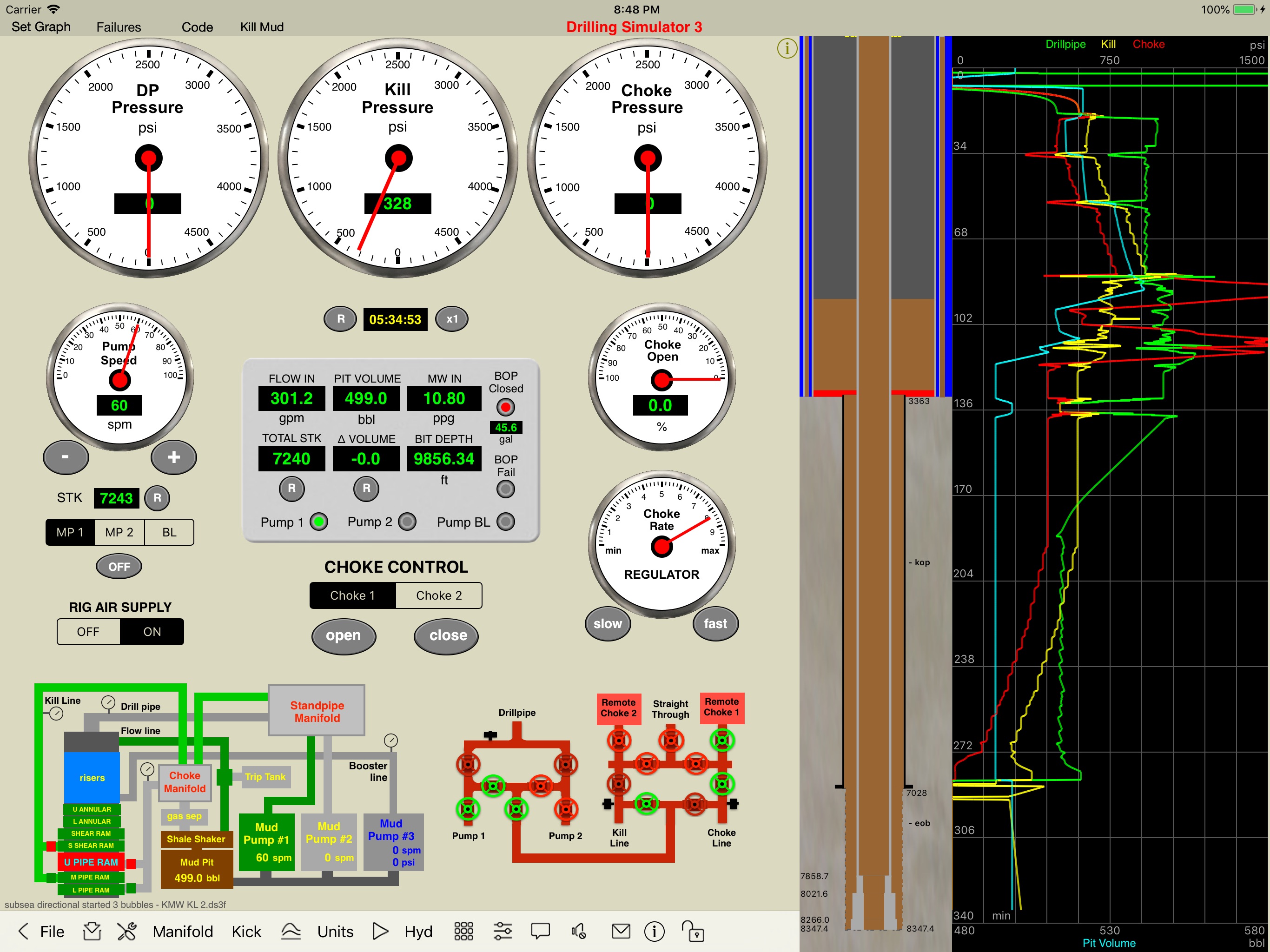
Drilling Simulator 3 (This App)

all of drilling simulator 2 PLUS:

1 – until 03 single kick bubbles on the borehole simultaneously

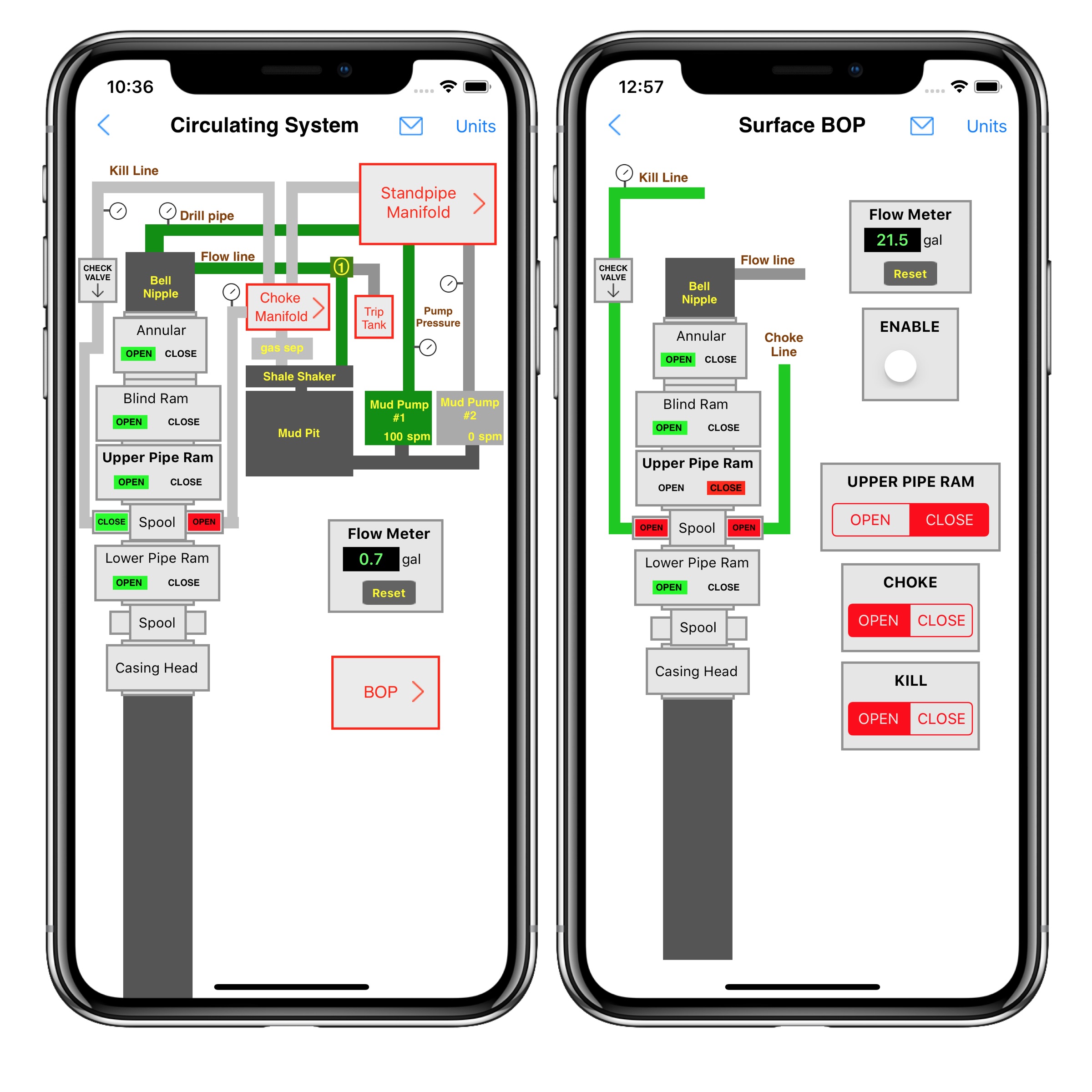
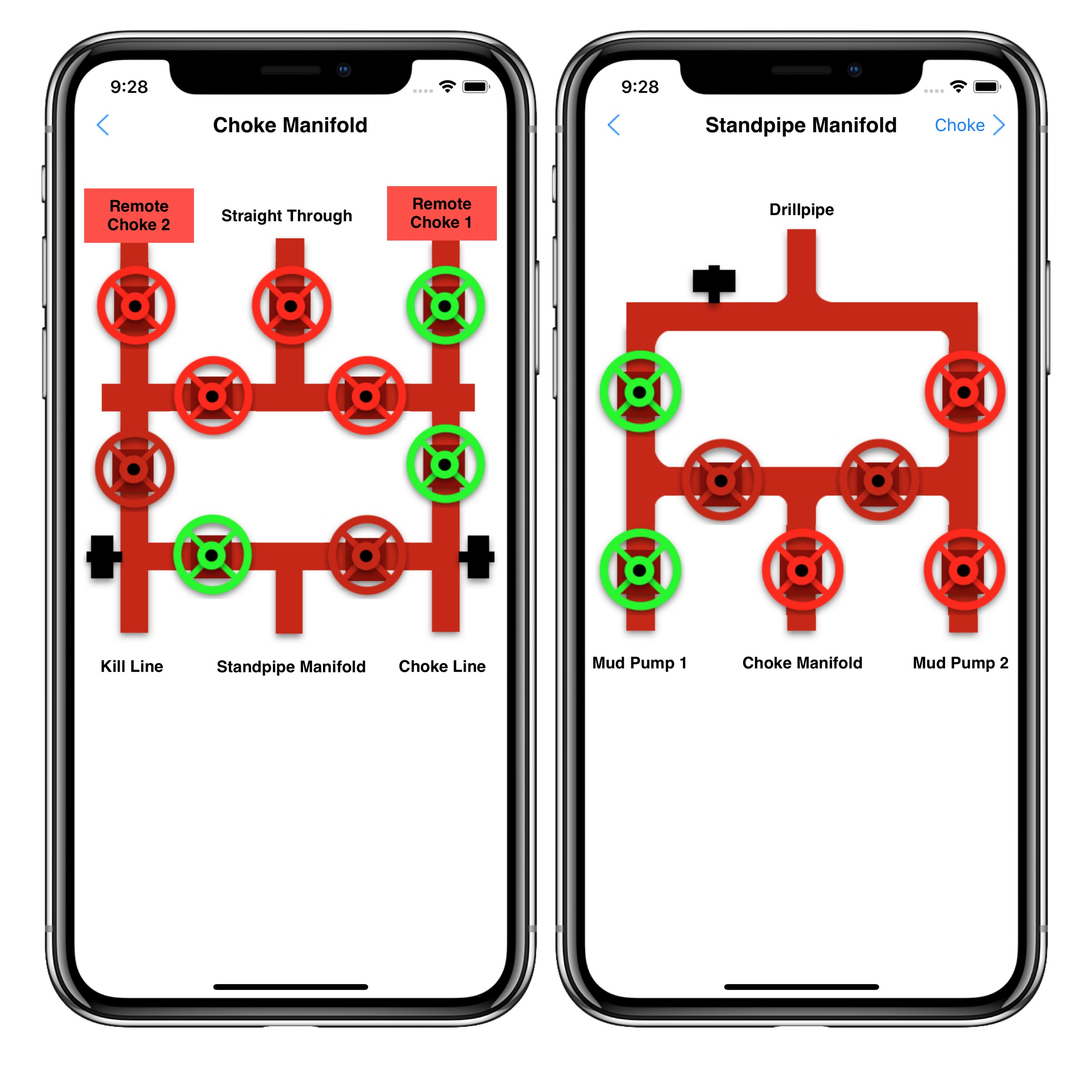
2 – standpipe manifold and choke manifold with 02 chokes and straight through

3 – Complications: failures schedule with Random option:

– Mud Pumps 1 and 2 “power end failure” or “fluid end failure”,

– Chokes 1 and 2 “plugged” or “washed”,

– One Drill Bit Nozzle “plugged” or “washed”

New in the next update (version 2.0 – Coming soon):

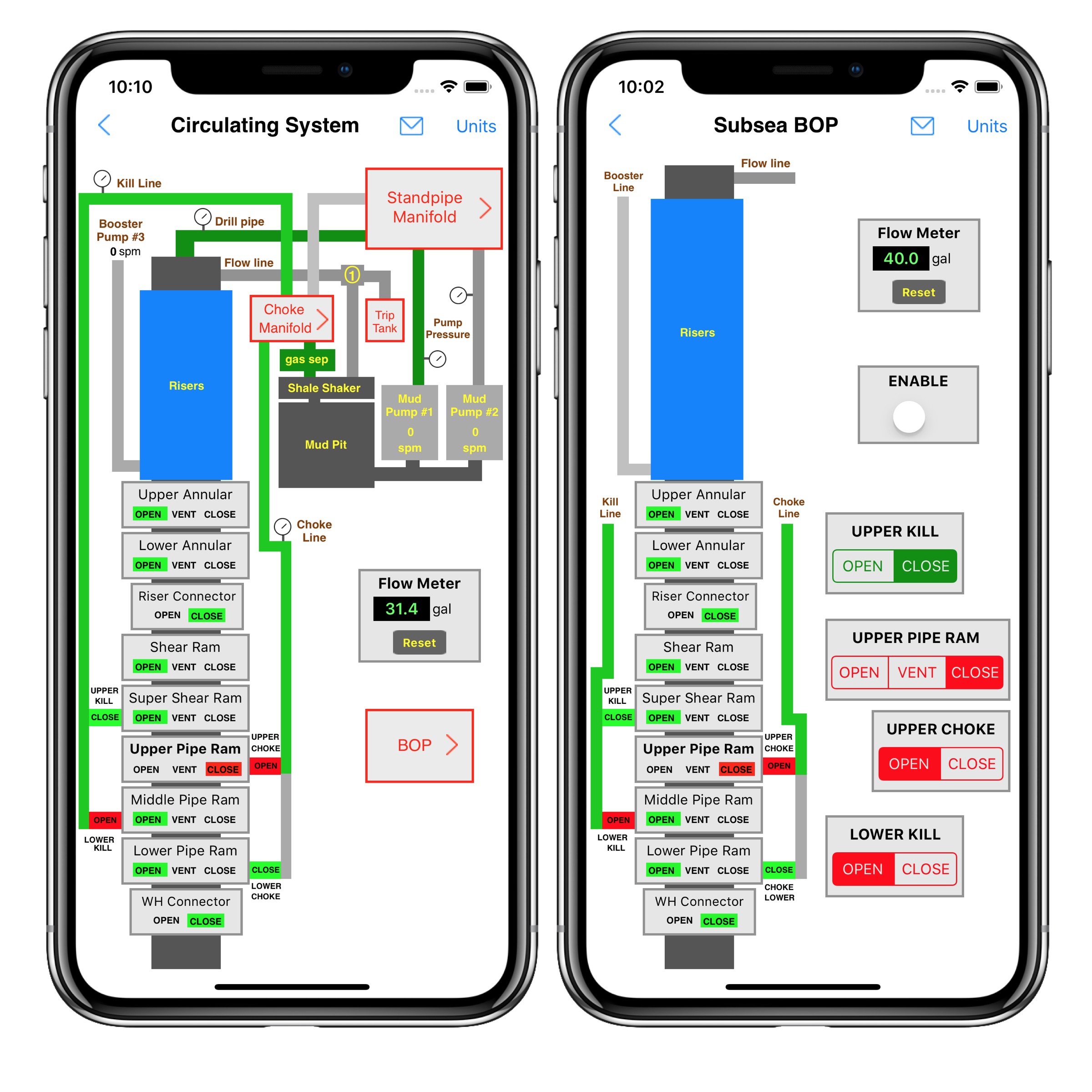
– Improved circulation options with subsea valves upper kill & lower kill & upper choke

– On subsea wells, now it is possible to circulate kill mud in the kill line & riser after filling choke line with kill mud weight, keeping bop closed.

– On surface wells, added upper kill line, upper choke and a check valve in kill line

– improved visual of the gauges.

ds3_20_02
Drilling Simulator 3

Drilling Simulator 3

Visit our Portfolio on the App Store

for more Oil & Gas apps for iPhone, iPod Touch, iPad and Mac OS X.

wellcontrol_portfolio

Visit our website for more Oil & Gas apps for iPhone, iPod Touch, iPad and Mac OS X.

oilgasapps_website_640

or http://www.oilgasware.com

contact@wellcontrol.com.br

Drilling Simulator 3 – New Update 2.0

App designed for both iPhone and iPad

New Version 2.0 coming soon on the App Store !!!

Drilling Simulator 1:

– Drilling on vertical well, kick detection, shut-in, stabilisation of pressures (sidpp, sicp, kick volume), save to iCloud to import from other app “Well Control Simulator”.

Drilling Simulator 2:

all of drilling simulator 1 PLUS Direcional and horizontal wells, well control using 01 choke and 01 single kick bubble on borehole and graphical analysis.

Drilling Simulator 3 (This App)

all of drilling simulator 2 PLUS:

1 – until 03 single kick bubbles on the borehole simultaneously

2 – standpipe manifold and choke manifold with 02 chokes and straight through

3 – Complications: failures schedule with Random option:

– Mud Pumps 1 and 2 “power end failure” or “fluid end failure”,

– Chokes 1 and 2 “plugged” or “washed”,

– One Drill Bit Nozzle “plugged” or “washed”

———-

New in the next update (version 2.0 – Coming soon):

– Improved circulation options with subsea valves upper kill & lower kill & upper choke

– On subsea wells, now it is possible to circulate kill mud in the kill line & riser after filling choke line with kill mud weight, keeping bop closed.

– On surface wells, added upper kill line, upper choke and a check valve in kill line

– improved visual of the gauges.

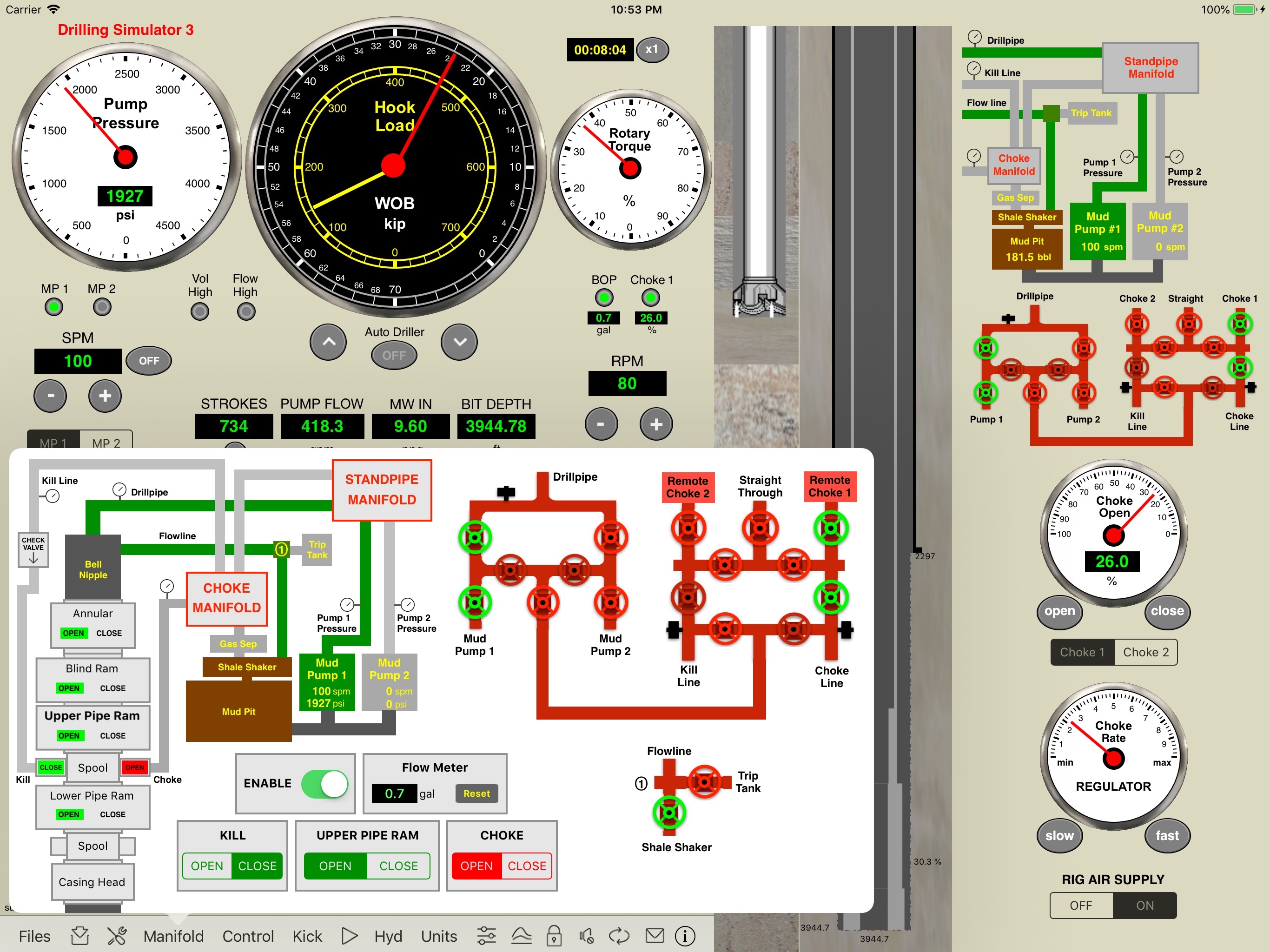
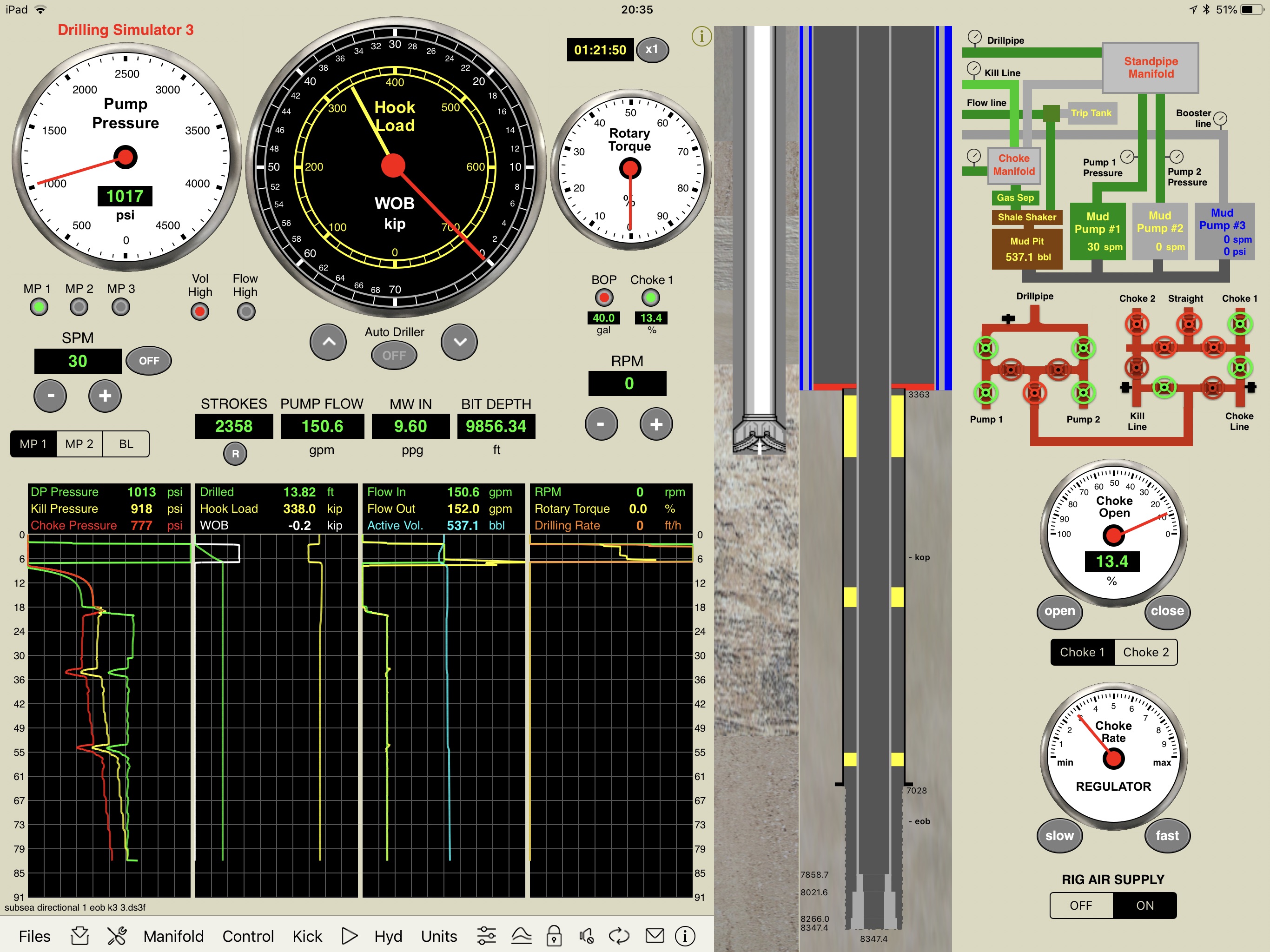
iPad screenshots:

SURFACE WELL: DRILLING

Drilling Simulator 3 - surface well
SUBSEA WELL: WELL CONTROL APPLYING THE DRILLER’S METHOD, WITH COMPLICATIONS:
Drilling Simulator 3 - subsea well
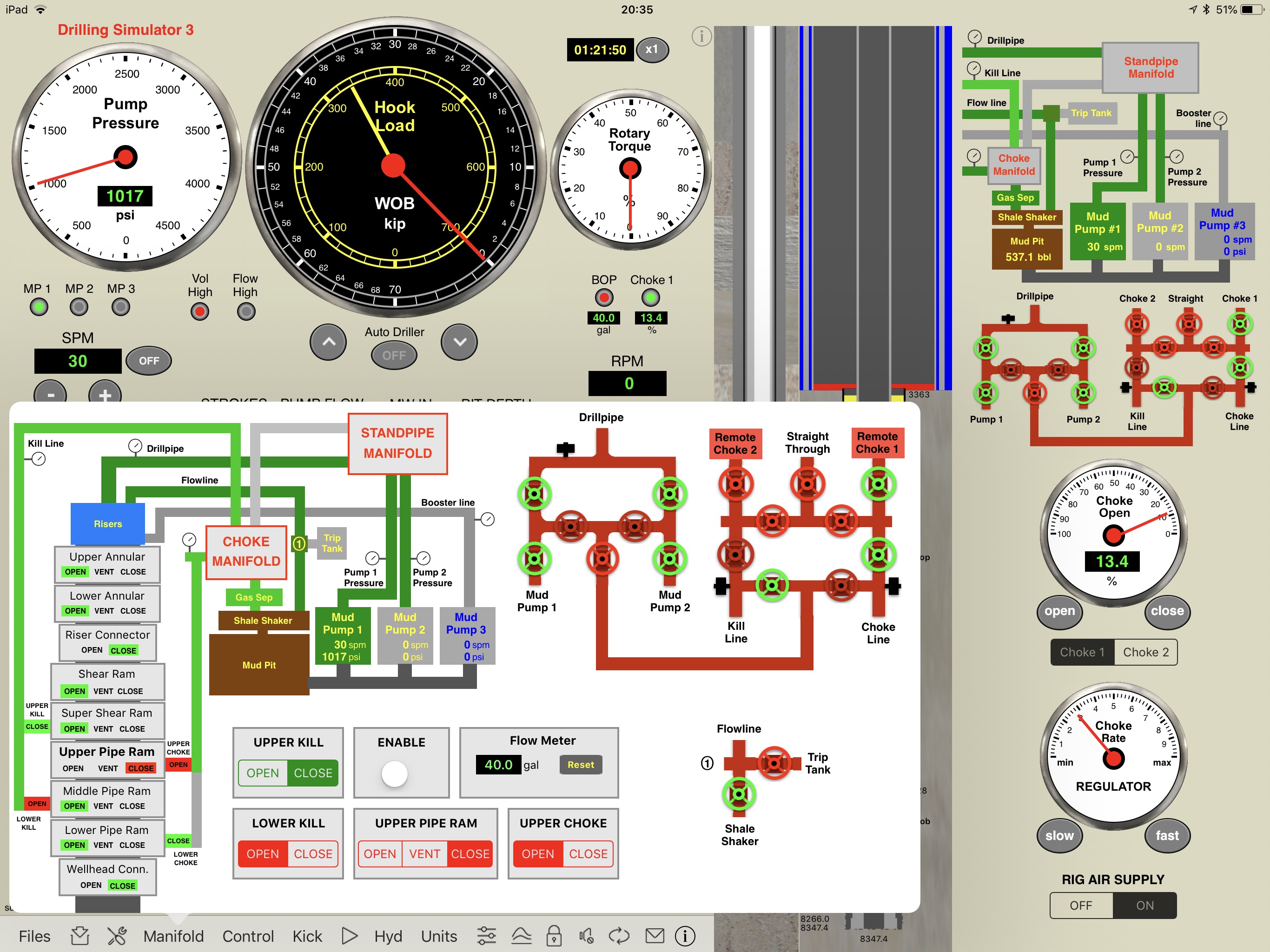
SUBSEA WELL: CIRCULATING KILL MUD IN THE KILL LINE WITH RETURN TO RISER, KEEPING BOP CLOSED:

Drilling Simulator 3 - subsea well
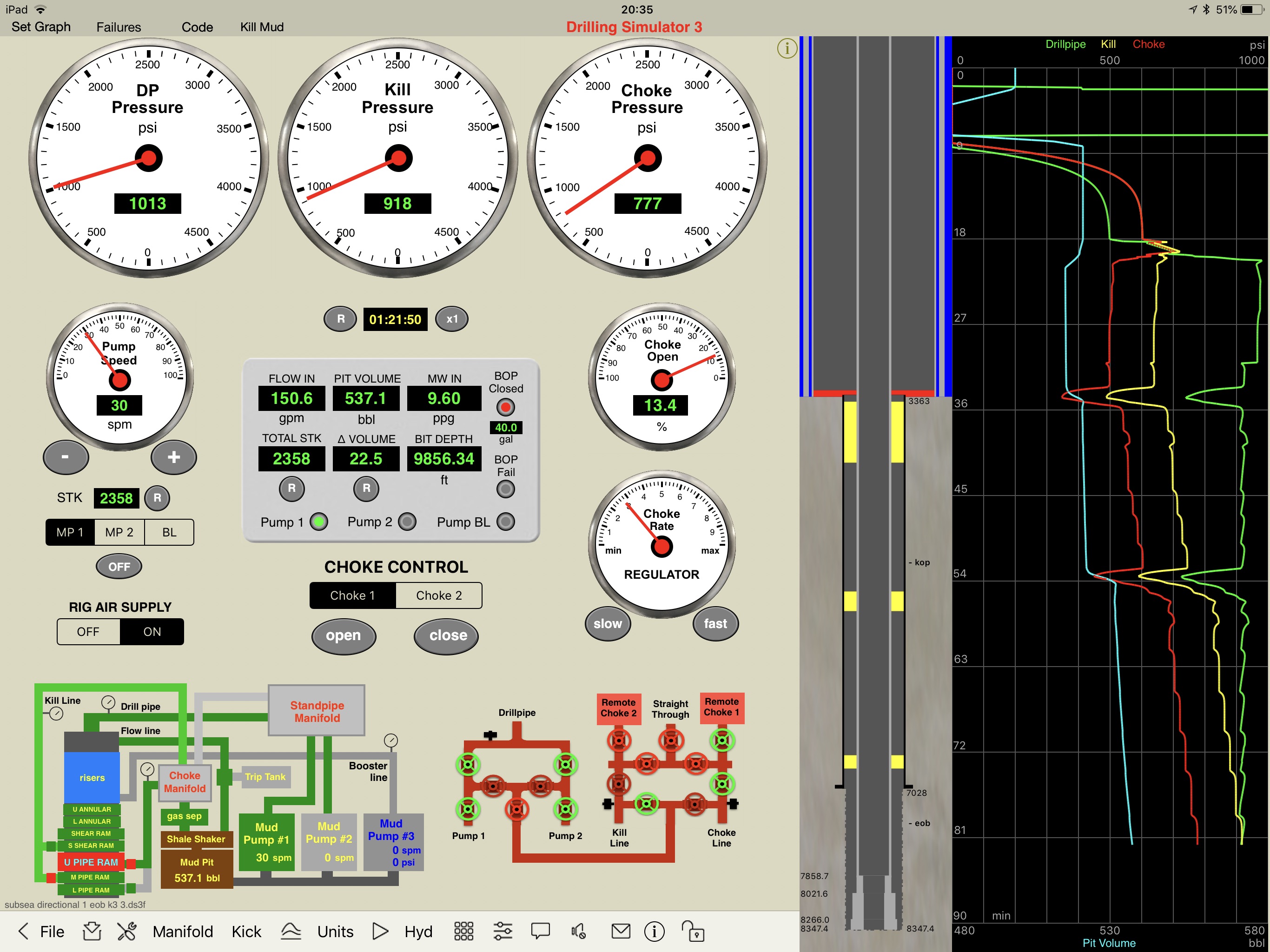
SUBSEA WELL: CIRCULATION COMPLETE WITH KILL MUD IN THE RISER AND BOP OPEN:

Drilling Simulator 3 - subsea well

Visit our Portfolio on the App Store

for more Oil & Gas apps for iPhone, iPod Touch, iPad and Mac OS X.

wellcontrol_portfolio

Visit our website for more Oil & Gas apps for iPhone, iPod Touch, iPad and Mac OS X.

oilgasapps_website_640

or http://www.oilgasware.com

contact@wellcontrol.com.br

Wait and Weight method on Directional Wells

 Wait and Weight method on Directional Wells

ww_on_directional_top01

During drilling operations on oil wells, there may to occur the inflow of formation fluids into the well, which is an undesirable condition. The driller should detect such events and shut-in the well immediately and to record informations corresponding to stabilization of pressures SIDPP (Shut-in Drillpipe Pressure) and SICP (Shut-in Casing Pressure) and the volume gain.

There are two methods more used to well control when the drill string (drill bit) is in the bottom of borehole (normally on drilling when reaches a formation with pressure bigger relative to the bottom hole pressure): The Driller’s Method and the Wait and Weight Method (also named Engineer ‘s Method).

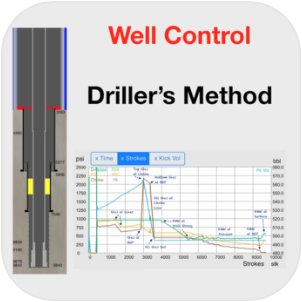
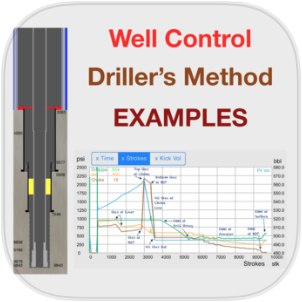
The Driller’s Method is performed with two circulations. The first circulation with the original fluid to circulate the influx out of well and the second circulation to fill the borehole with a new fluid. This method can be started immediately after shut-in the well.
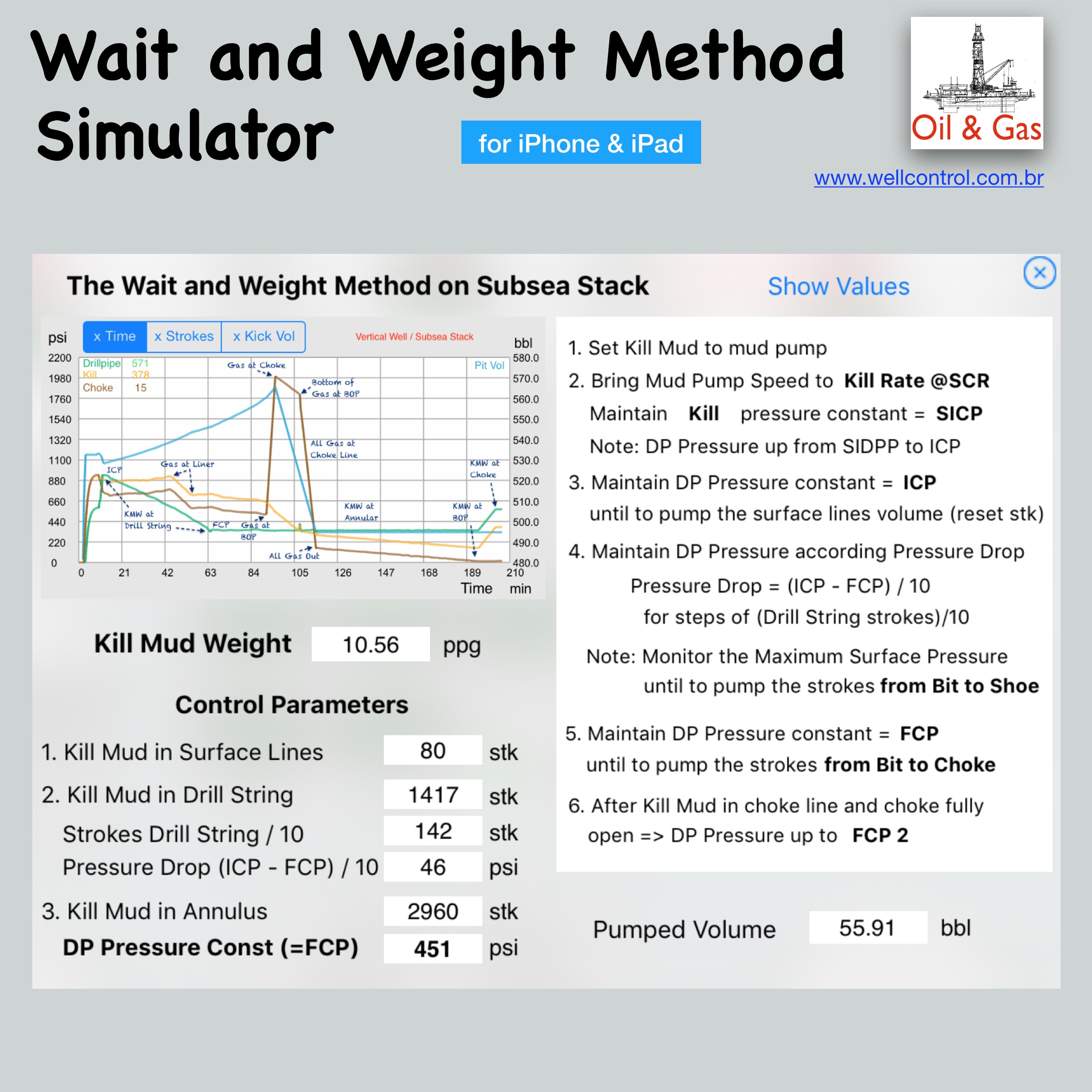
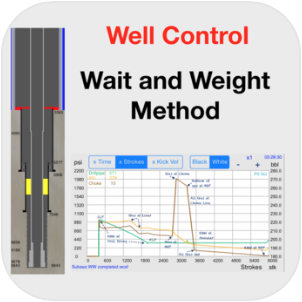
The Wait and Weight Method is performed just with a single circulation with the new fluid, but is necessary to wait a lag time until to prepare the new fluid to start the method.
The choice of the method

The choice between these two methods is a controversial question among professionals of oil & gas, but if the rig has already the new fluid available to control the well (the hydrostatic pressure of the new fluid is equivalent to the formation pressure), the Wait and Weight method is aplied and the control will be just with a single circulation in two steps:

Wait and Weight Method

Step 1

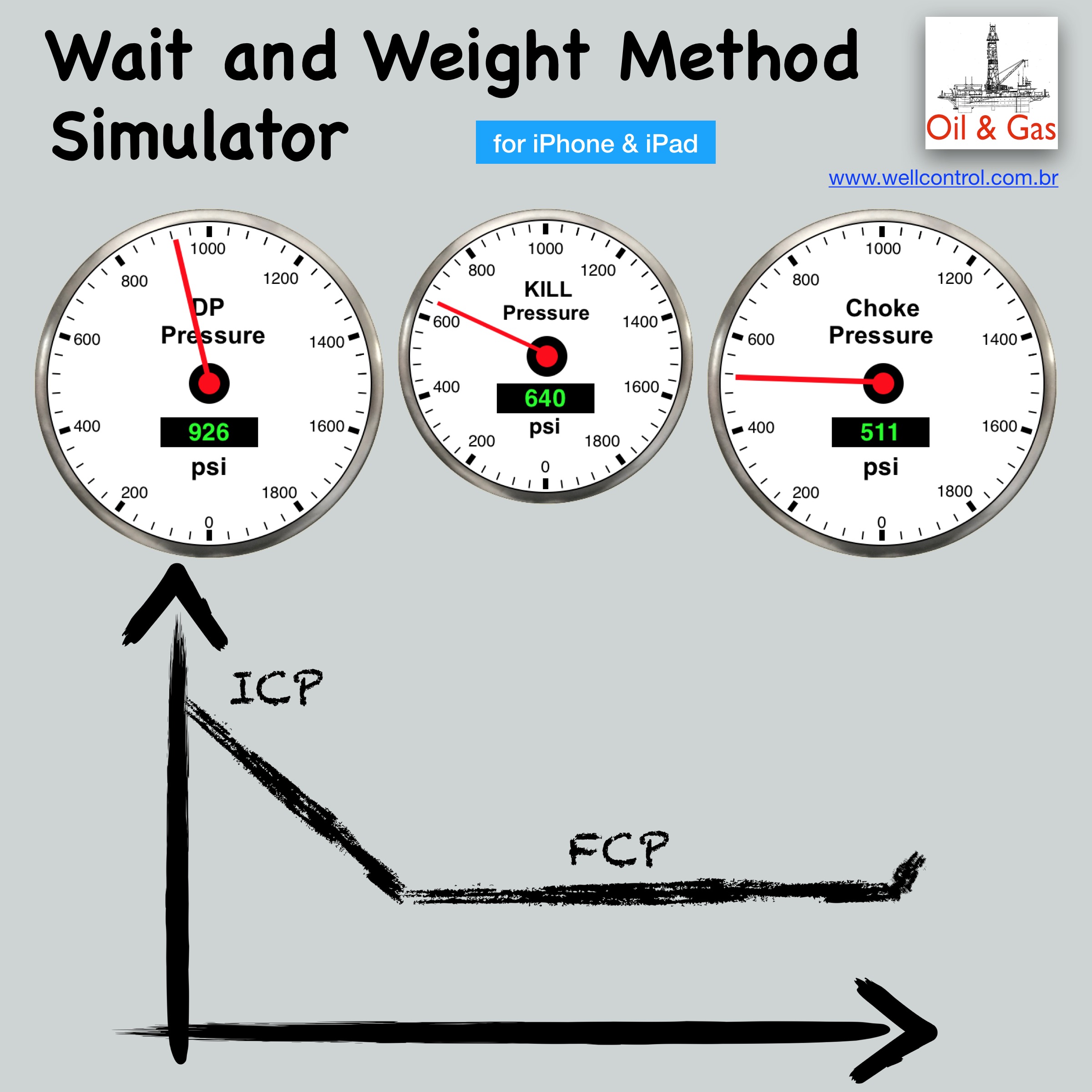
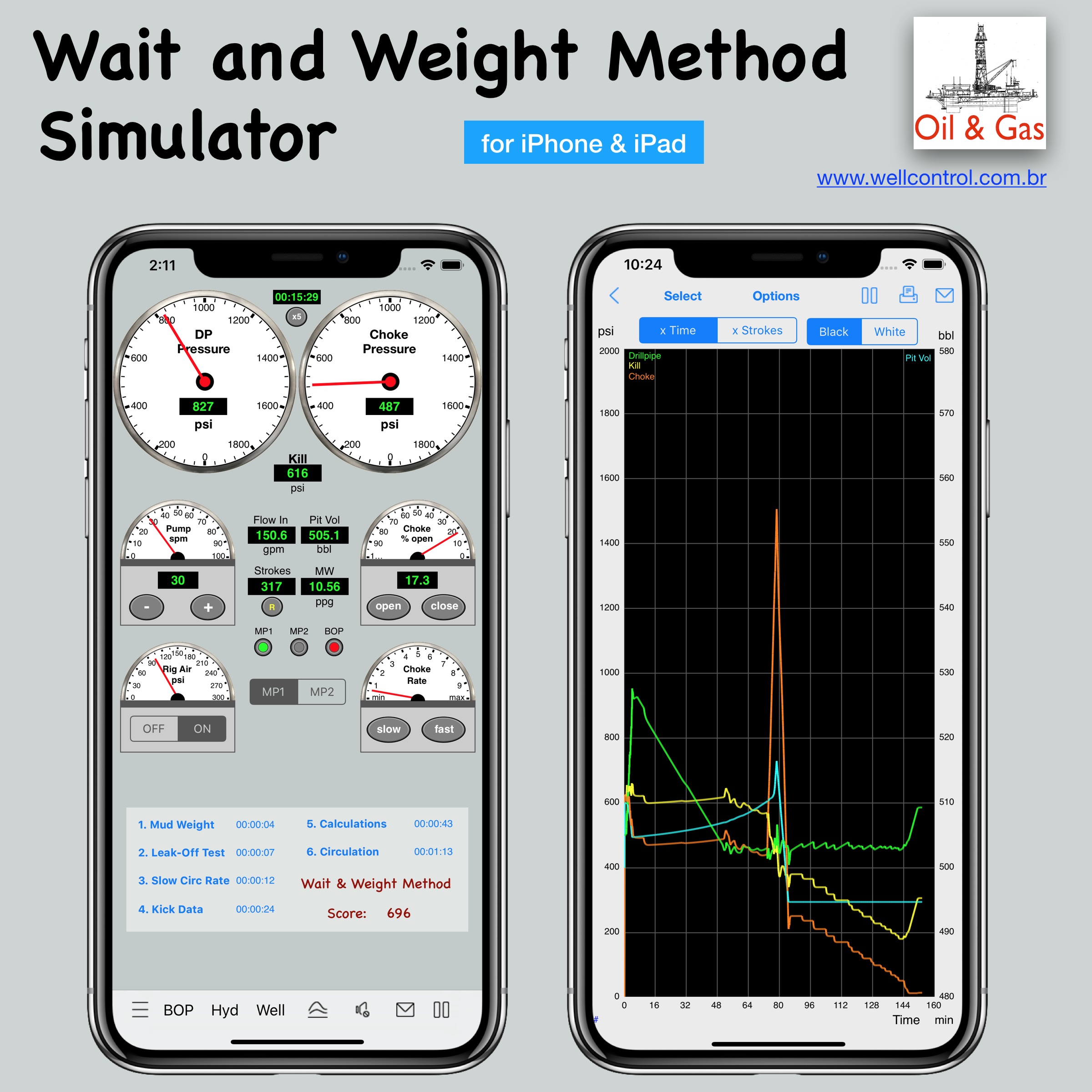
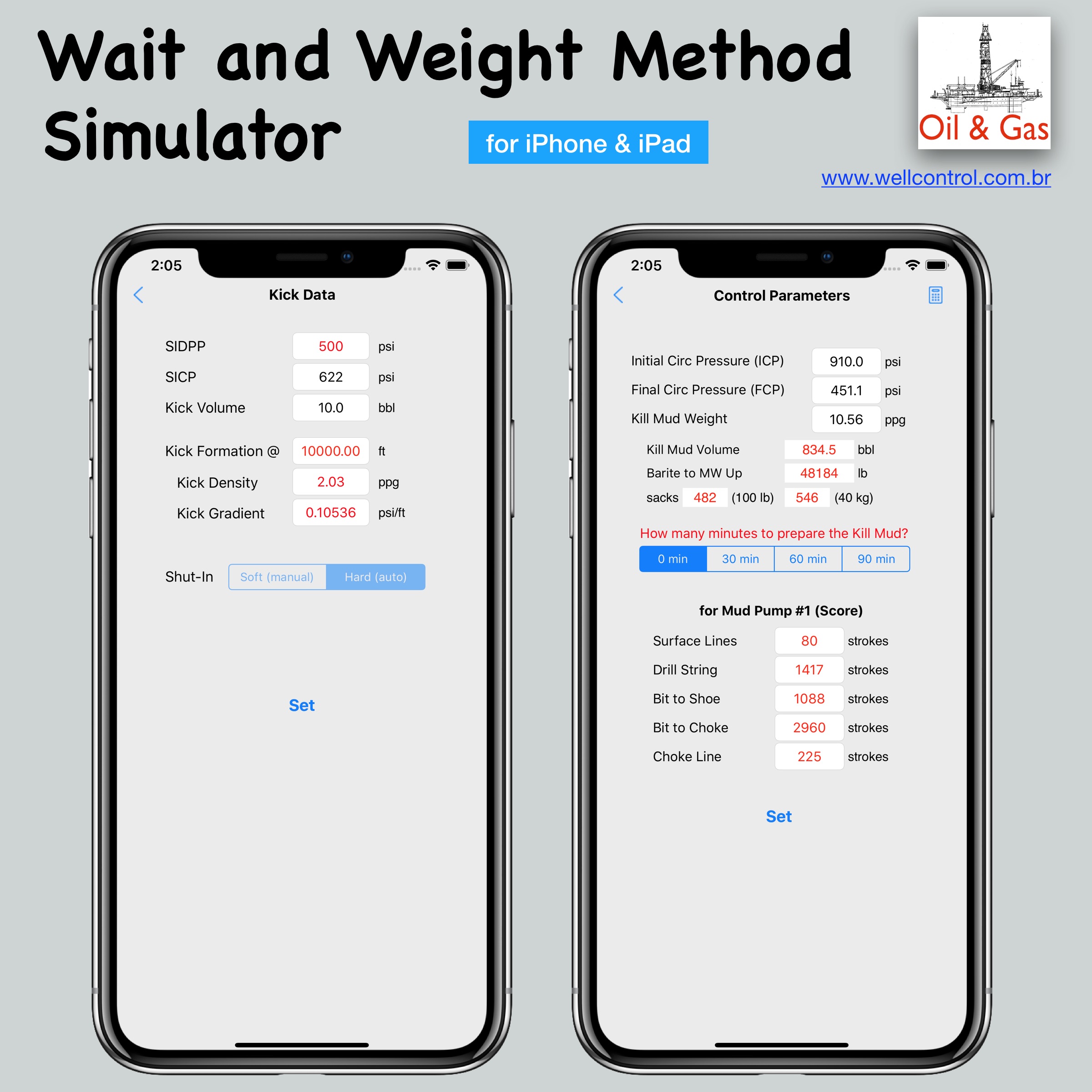
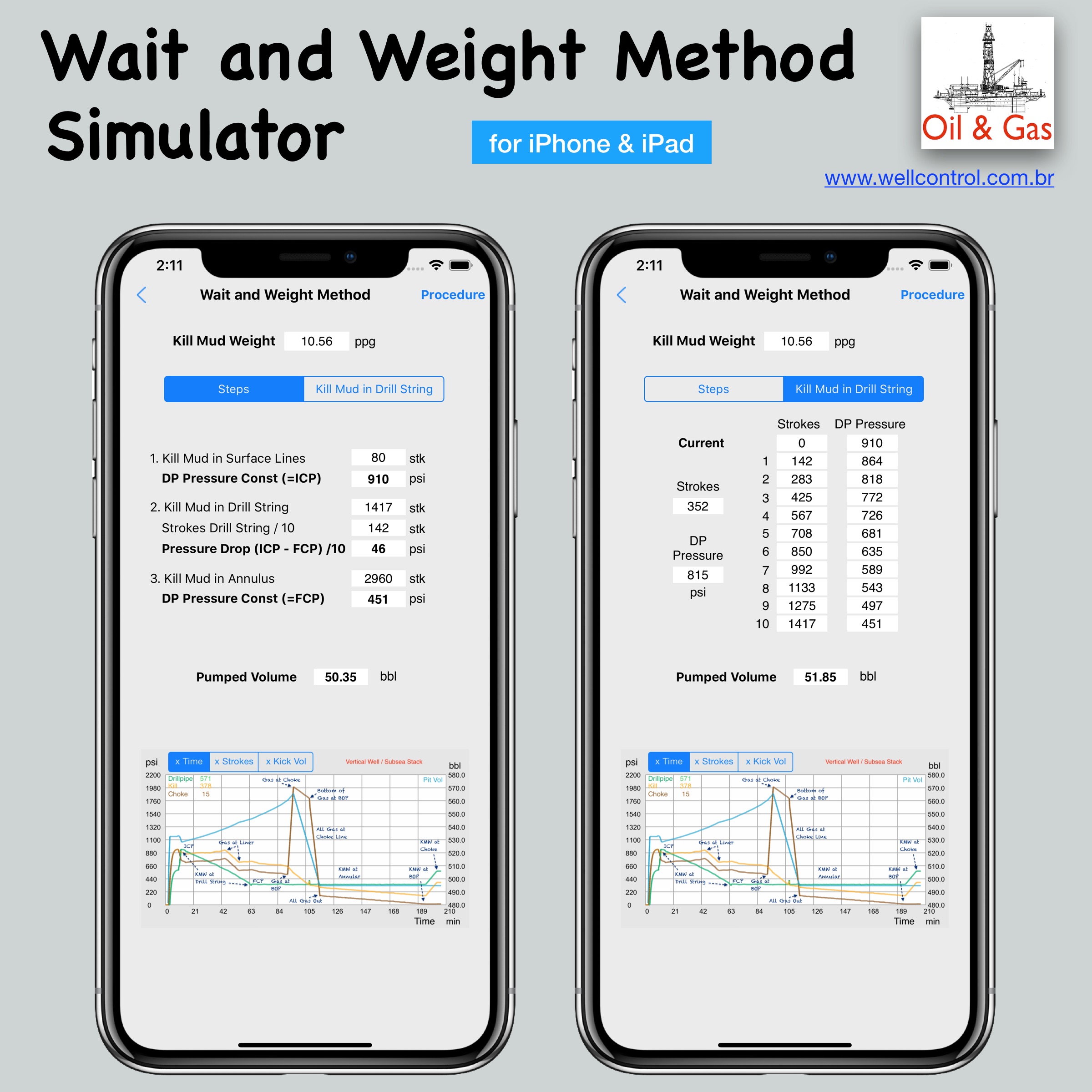
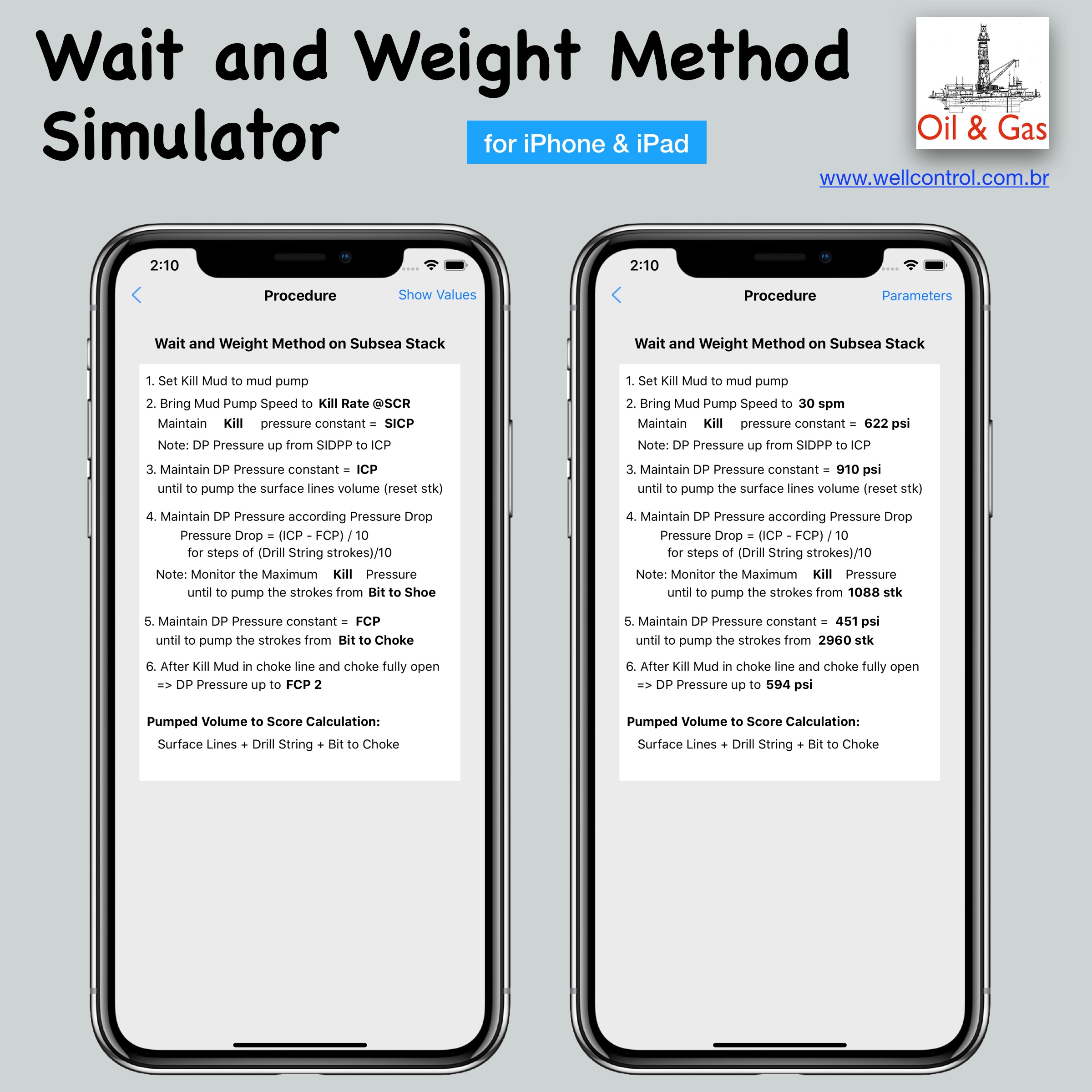
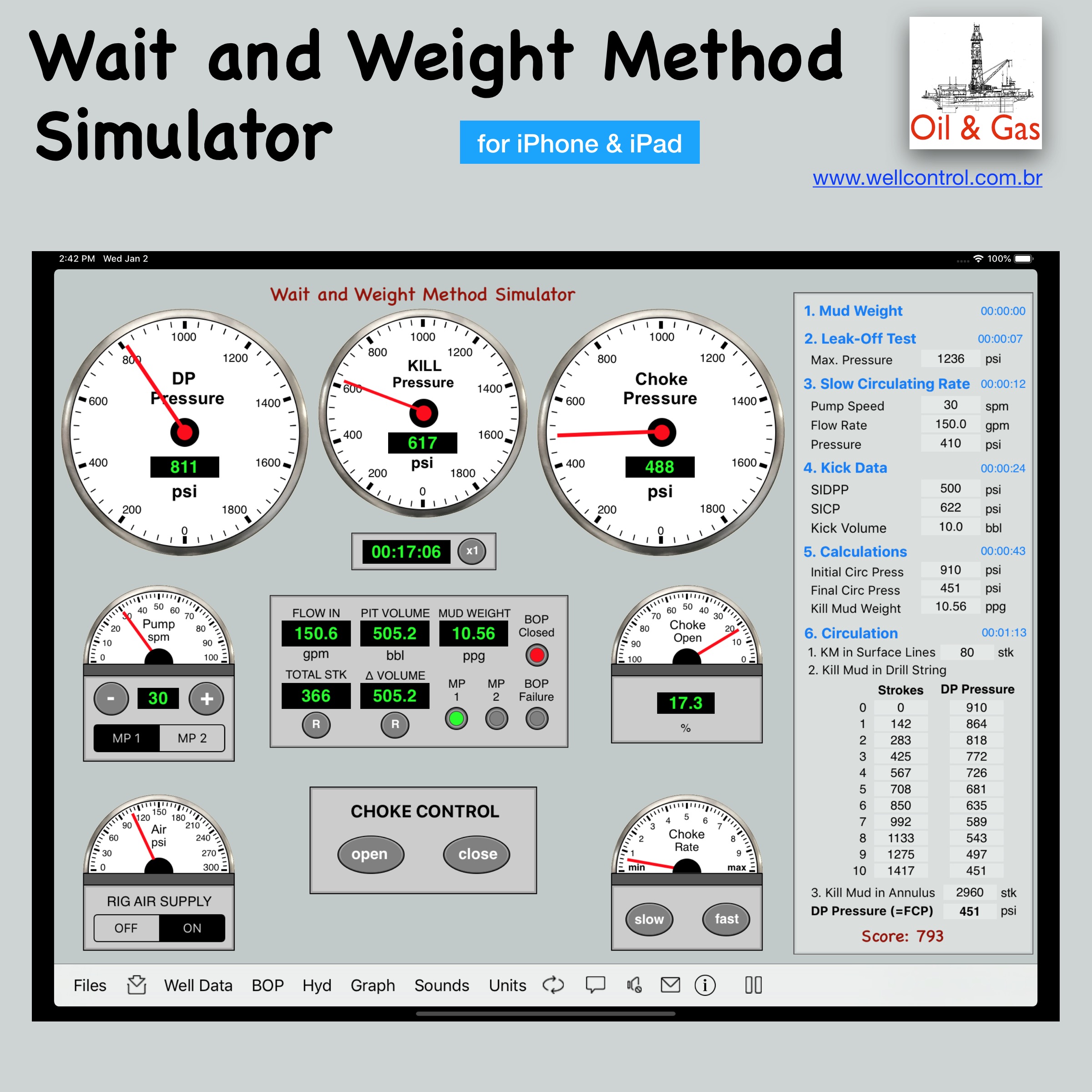
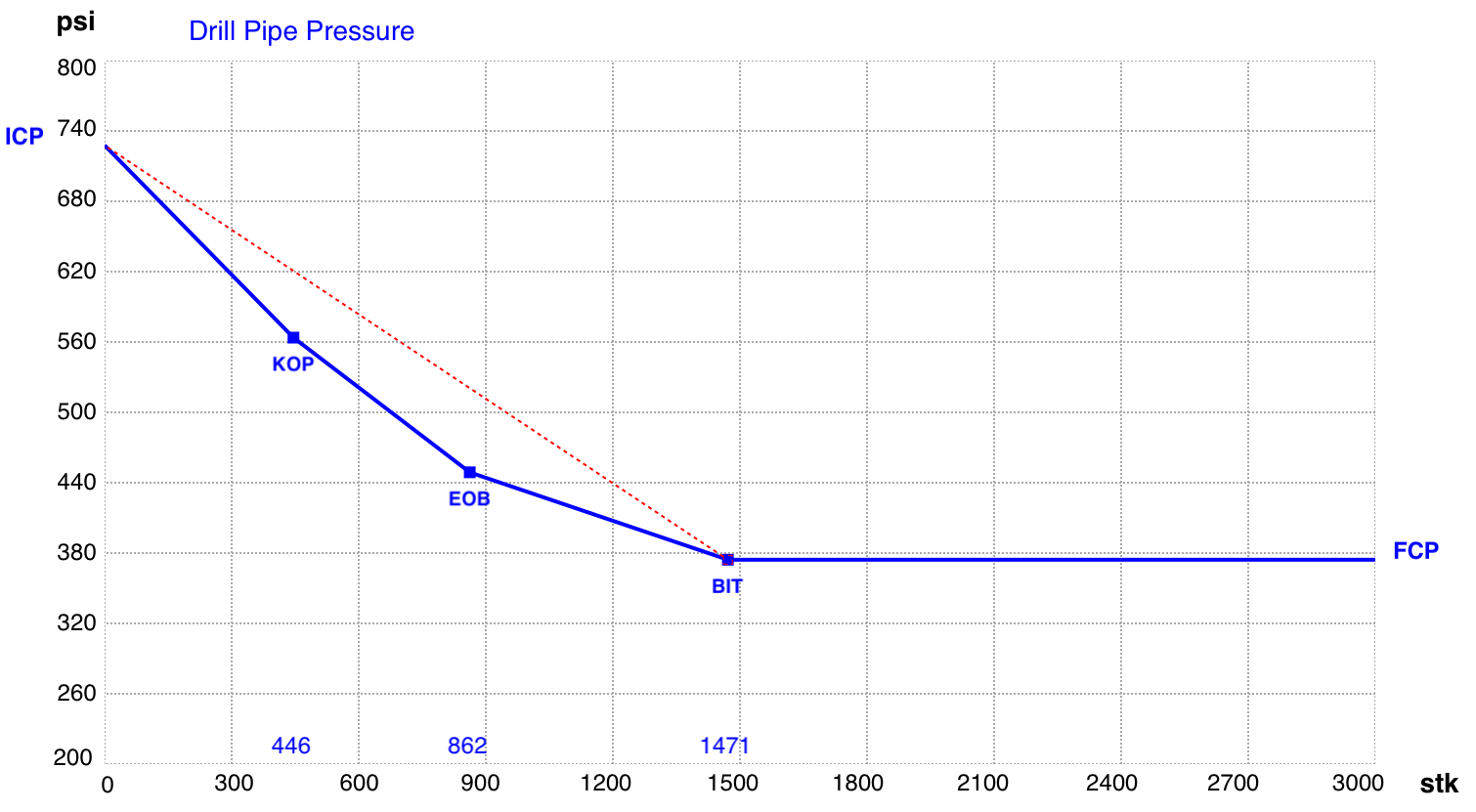
Replacing the original fluid in the drill string with the new fluid circulating until the drill bit. Start pump and bring the pump speed until the slow circulation rate, keeping the circulating pressure according the table “Pressure versus Pumped Strokes”, starting with the Initial Circulating Pressure (ICP) and ending with the Final Circulating Pressure (FCP).
ICP = SIDPP + Circulating Pressure @ Slow Circulating Rate (recorded previously).

FCP = Pressure(@ scr) x New Fluid Density / Original Fluid Density

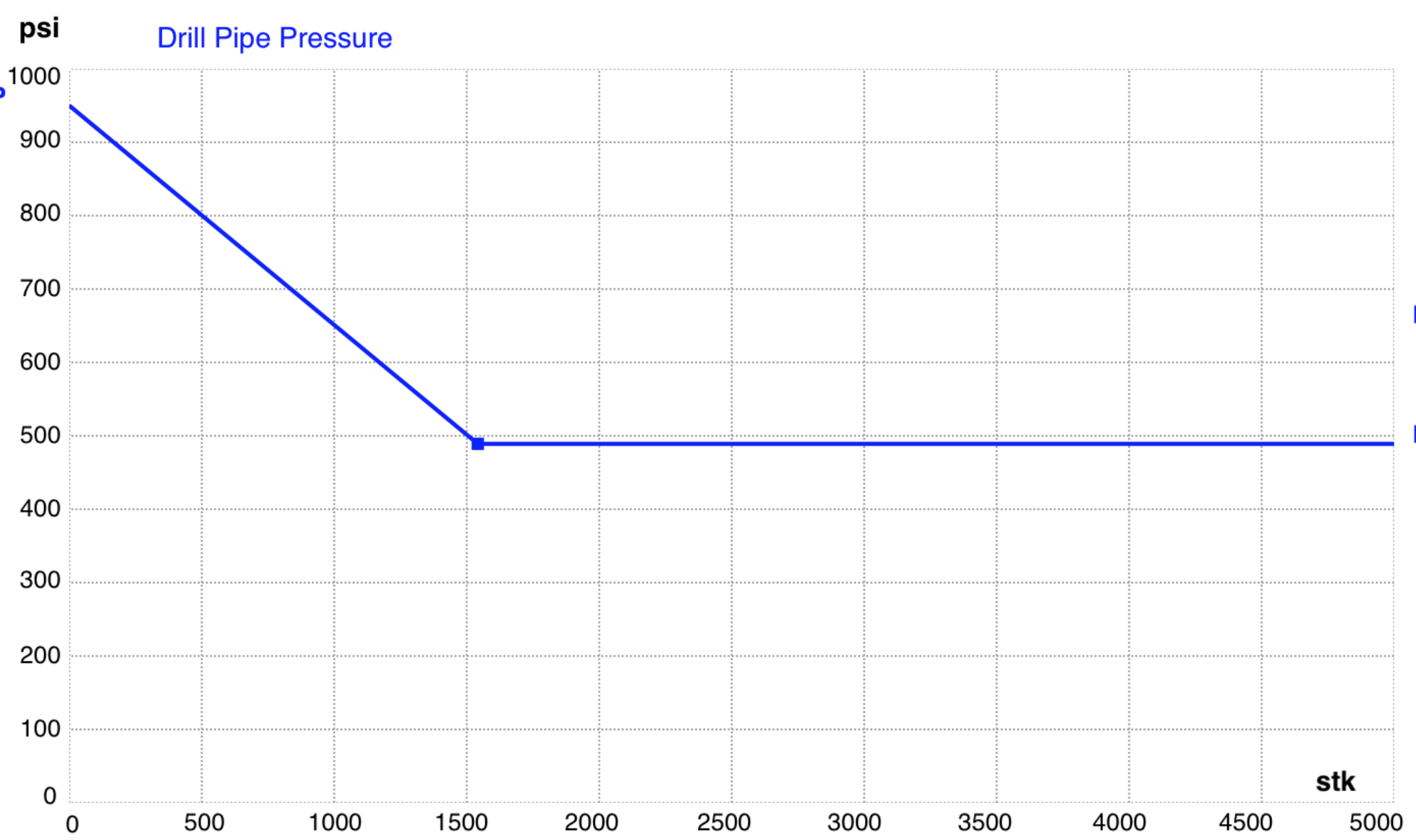
Vertical Wells

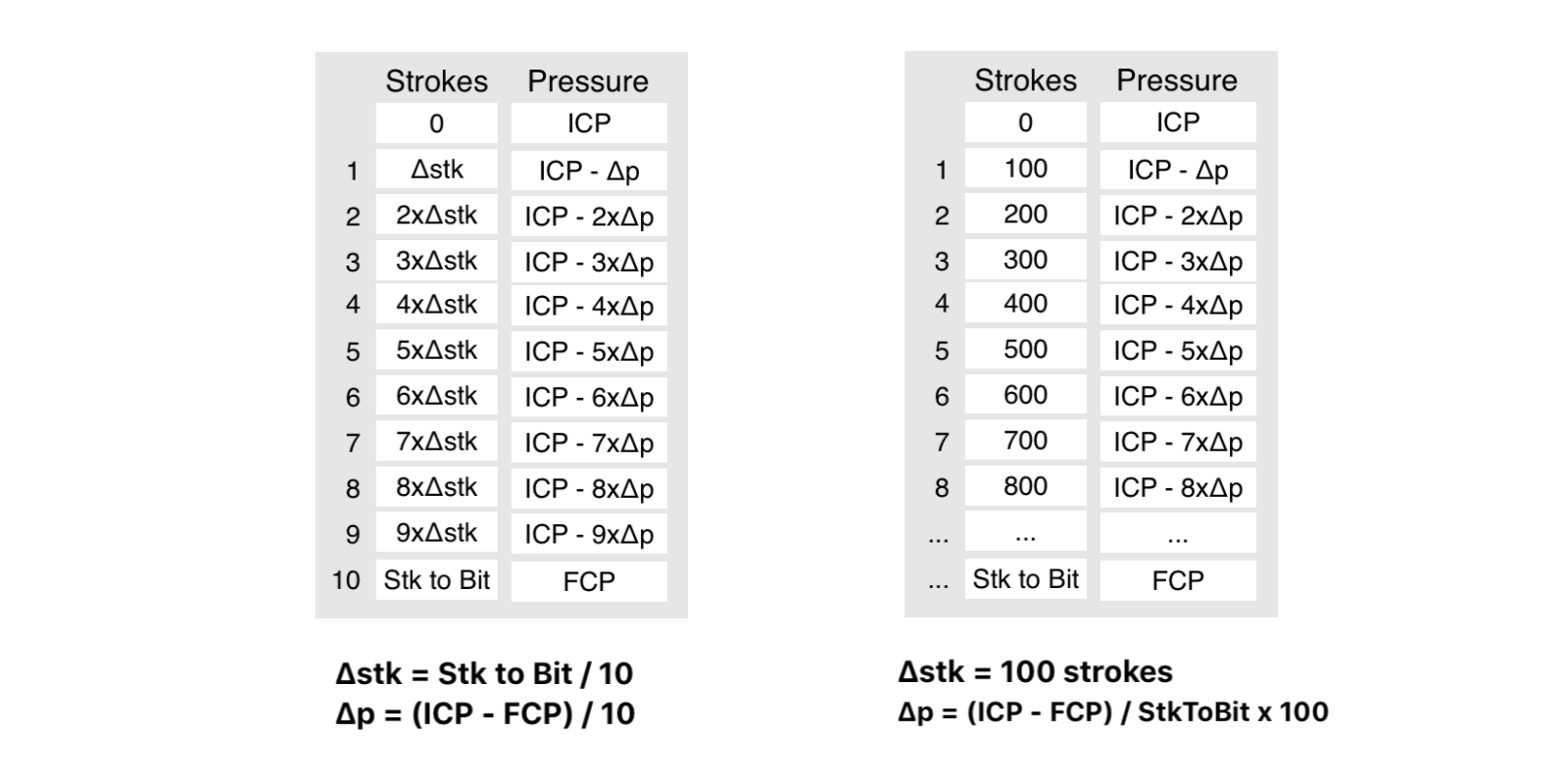
On vertical section, the rate “pressure drop / stroke” is constant and the calculations can be made in 10 steps.

ww_table

ww_graph_vert

Directional Wells

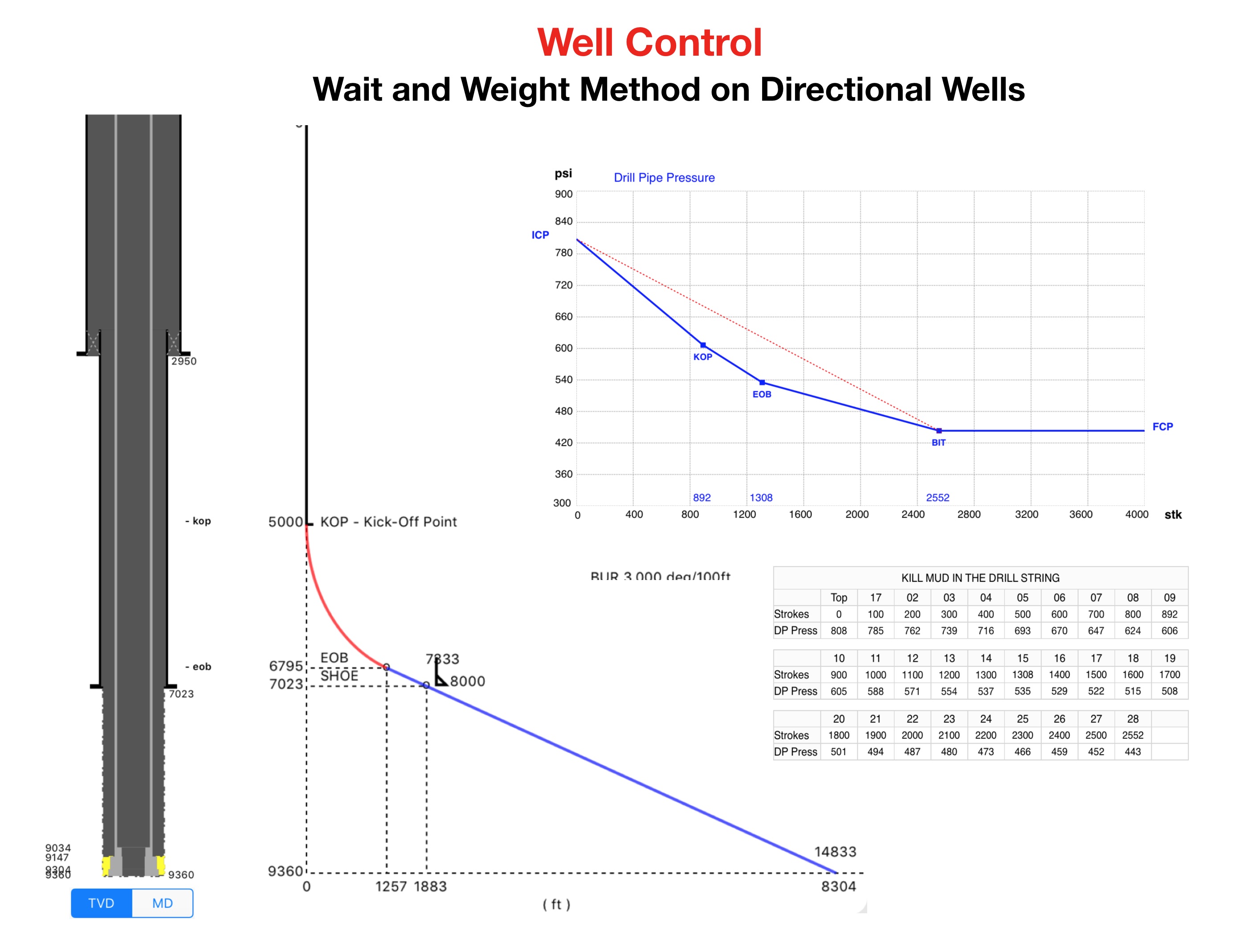
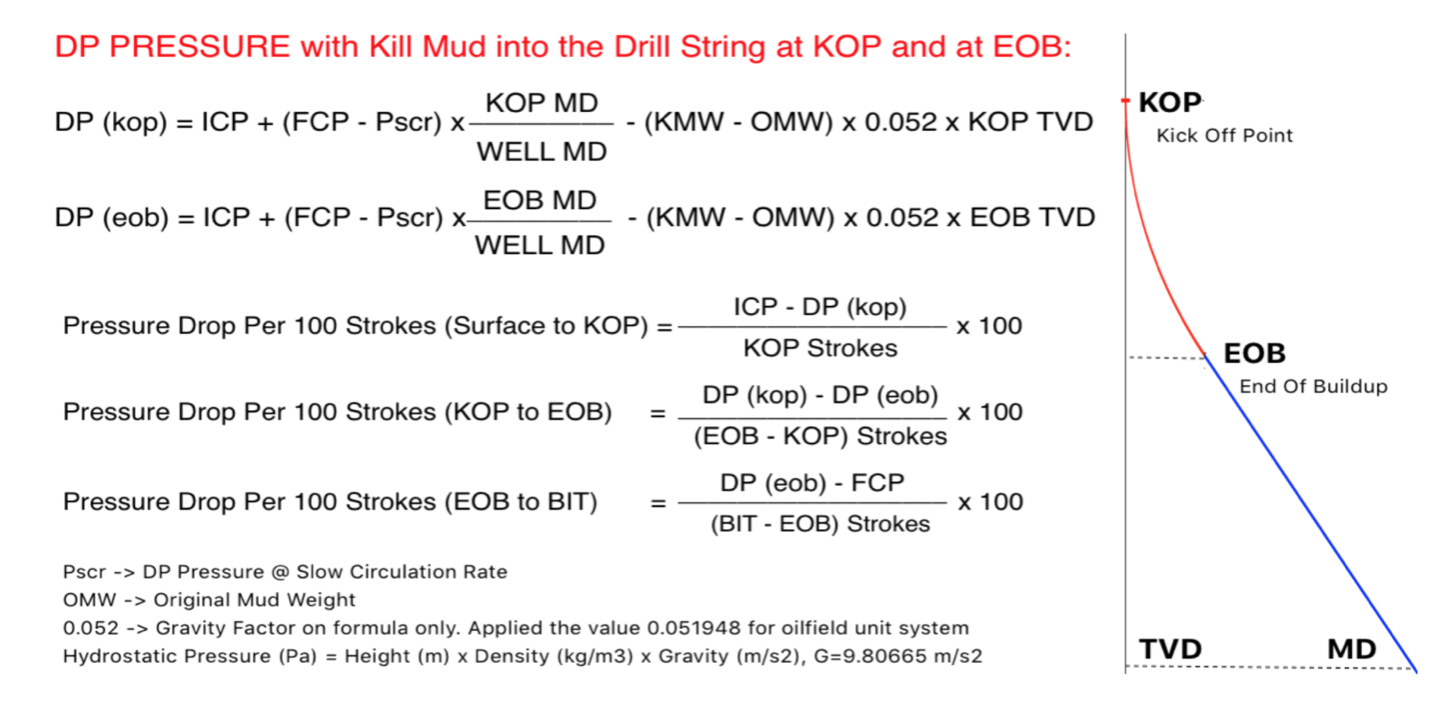
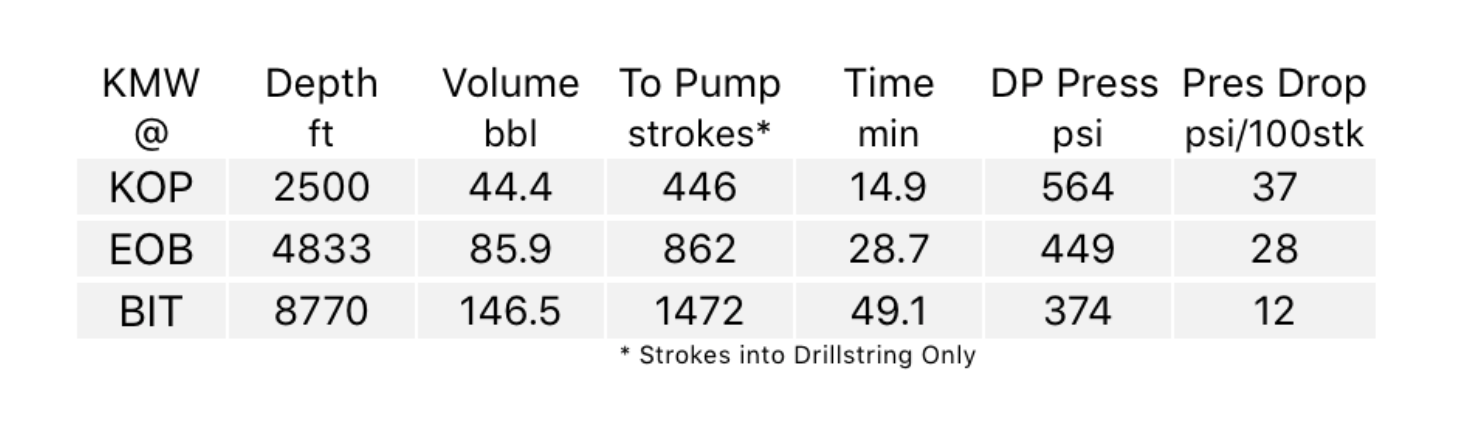
On deviated section, starting on Kick-Off Point (KOP), the rate “pressure drop / stroke” is not constant. The calculations will consider the steps by 100 strokes each.

ww_direc_calcs

ww_dir_table_calcs

ww_graph_dir2

Step 2

Continue the circulation with the new fluid to fill the all annular until the surface keeping the circulating pressure constant equal to FCP – Final Circulating Pressure.

Operational Limits

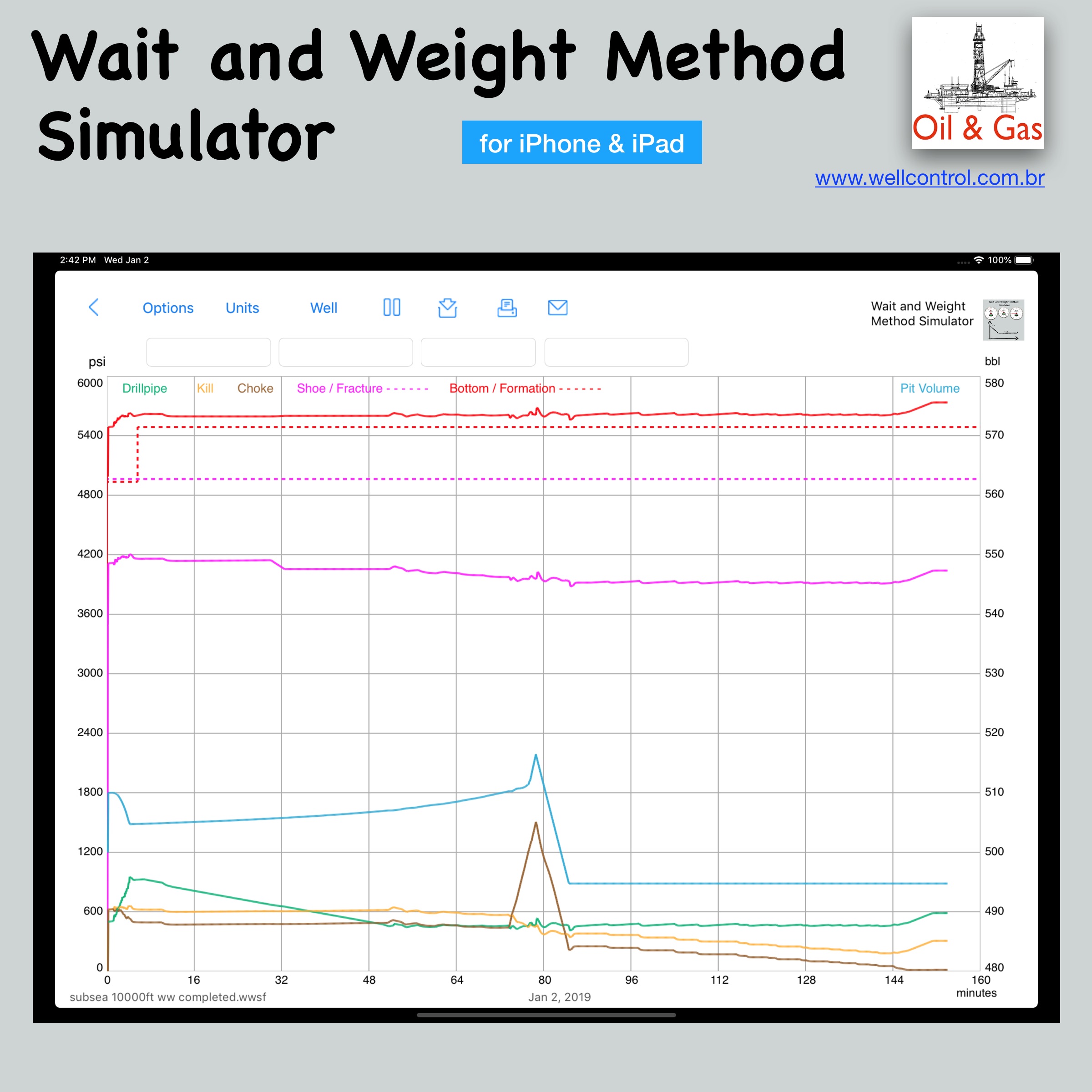
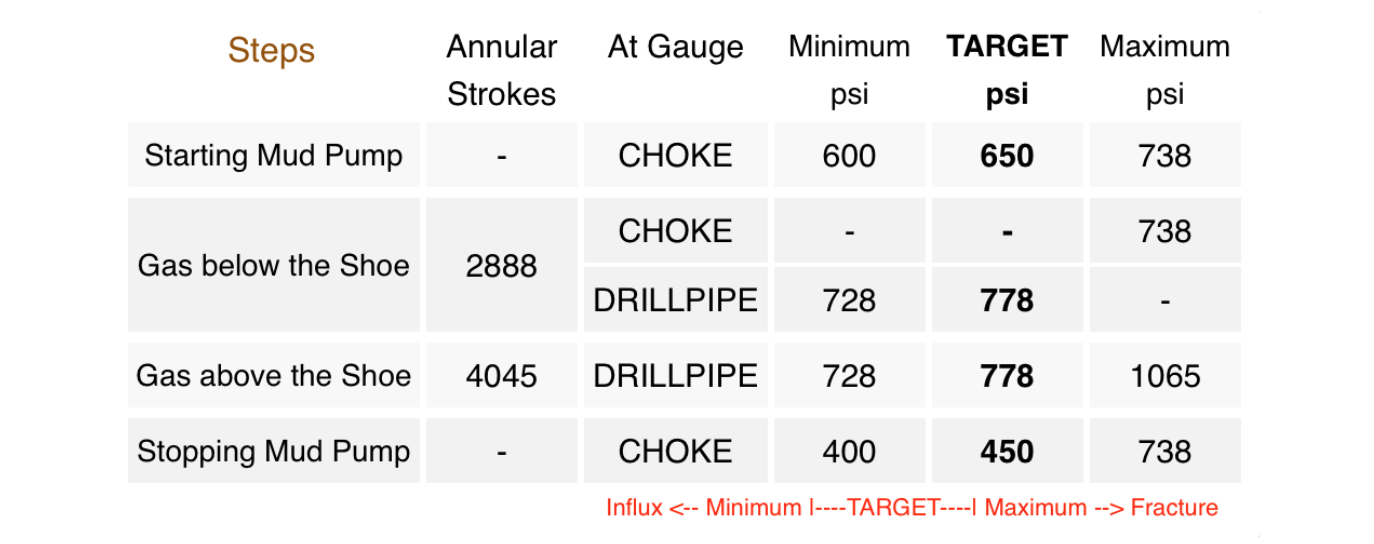
It is very important to monitor operational limits during the circulation to avoid fracture of the formation, usually at the shoe depth of the last casing.

The advantage of the “Wait and Weight” method is to provide a lower resultant pressure at the shoe depth before the gas reaches the shoe depth, that is, when the new fluid passes through the drill bit, increasing the hydrostatic pressure in the annulus before of the gas to reach the shoe depth.

ww_limits

Conclusion

The Wait and Weight method is advantageous when the rig has already the new fluid available to immediate circulation. Normally the new fluid need a lag time to be prepared. (1) On well closed, an influx of gas is moving up continuously and pressurizing the borehole all the time. (2) The calculations to control directional wells are relatively complex.

If it is not possible for the new fluid to reach the annulus before the gas reaches the shoe depth, due to (1) the lag time to prepare the new fluid or (2) the volume of the drill string is greater than the volume of the annulus above the gas until the shoe depth or (3) the difficulty to calculations on directional wells or (4) formations with low fracture pressure on deepwater for example, it is recommended choose the “Driller’s Method” to start immediately after the shut-in the well, holding the circulation pressure equal to Initial Circulating Pressure until the circulation of the total volume of the annulus and to replace the fluid only in the second circulation of this method.

I hope that this simple explanation about the Wait and Wait method on directional wells helps on choicing the method most efficient.


Well Control Methods apps: 


iOS and Mac

iOS ( FREE! )

iOS and Mac

iOS and Mac

iOS and Mac

Well Control Worksheets apps:


iPad ( FREE! ) Mac

iPad and Mac

iPad and Mac

iPad and Mac


Visit our Portfolio on the App Store

for more Oil & Gas apps for iPhone, iPod Touch, iPad and Mac OS X.

Portfolio_2107_4x5

Visit our website for more Oil & Gas apps for iPhone, iPod Touch, iPad and Mac OS X.

oilgasapps_website_640

http://www.oilgasware.com

contact@wellcontrol.com.br